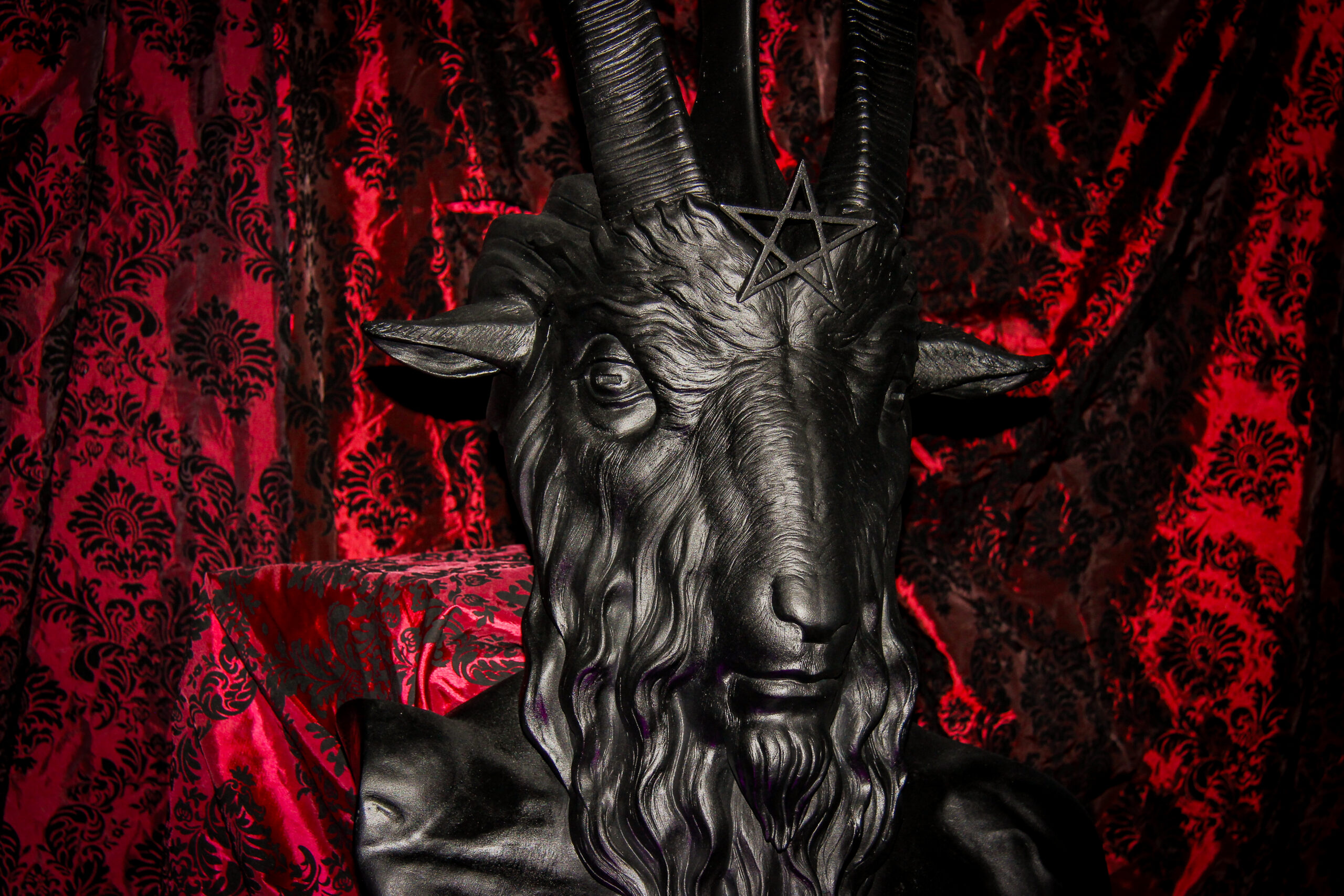
Picture a nine-foot-tall Baphomet statue perched atop a flatbed truck and rolling through the heart of the Bible Belt. For the casual observer, it may seem like a provocation – a piece of shock-art designed to scandalize the faithful. But for the Satanic Representation Campaign (SRC), this literary villain serves as a legal crowbar, symbolizing their resistance to theocracy.
As theocratic encroachment moves from the fringes of American politics into the halls of legislative power, The Satanic Temple (TST) has emerged as a sharp, secularist vanguard, wielding the First Amendment to expose the fragility of our so-called pluralism.
In a recent conversation with Minister Orpheus Gaur and Exarch Io Locke, Director and Assistant Director of the SRC, they explain the logic of this argument for equality. Their work is an impressive paradox: a “ragtag group of outsiders,” in their words, has become one of the most diligent defenders of American civil rights today.
The Golden Rule of SRC: “If You Open for One, You Open for All”
The SRC’s legal strategy is anchored to their uncompromising demand for equal access. They are challenging the legislative hegemony that seeks to favor one faith over all others: Christianity.
The blueprint for this was established as far back as 2013 at the Arkansas State Capitol. When a Ten Commandments monument was placed on state grounds, TST transported their Baphomet statue to the site in a “rally style” challenge.
This was a physical manifestation of a legal threat that eventually forced a judicial reckoning. The resulting ruling underscored a foundational truth of our so-called democracy: if a government body opens a public space to one religious monument, it cannot constitutionally bar others. As Gaur notes, “Equal representation is, above all, part of the First Amendment.”
This “flip the coin” thought experiment is the SRC’s most powerful tool, one they use to challenge these inequalities. In Florida, where Governor Ron DeSantis explicitly claimed Satanists would be barred from a new school chaplain program, the SRC’s response was the same mirrors-up defense: “If you allow a Christian chaplain, you have to allow Satanic chaplains.”
Navigating the Hoops of Dissent
Challenging theocratic overreach is rarely a single, cinematic courtroom moment; more often, it is a war of bureaucratic attrition. The SRC frequently finds itself navigating a “bureaucratic gauntlet” of permits and insurance hurdles designed to exhaust their resources.
“They don’t expect us to follow through,” Gaur explains. The strategy of many state authorities is to demand that the group “jump through hoops,” assuming that a group of outsiders will lack the organizational discipline to comply.
However, the SRC’s power lies in its persistence. Meeting every requirement demanded of them and demonstrating their readiness to litigate, they force authorities “back on their heels.”
This follow-through has already caused cold feet in numerous Florida school districts. While they continue to monitor districts that have enacted chaplaincy programs, many have chosen to abandon the programs entirely rather than deal with the “hassle” of providing the equality TST demands.
The Satanic Pulpit: Empowering the Masses
One of the SRC’s internal investments is the “Satanic Pulpit,” a training program designed to equip members with the tools needed to speak with conviction in hostile civic spaces and beyond. These are essentially confidence workshops for those who want to learn how to purvey their beliefs more effectively.
The project is structured around:
• Virtual lessons on topics such as “philosophical razors,” identifying logical fallacies, and ad hominem attacks used to dismiss Satanists.
• A psychological shift from the paralyzing thought of “no one likes me here” to “but they’re going to listen.”
• Allowing members to practice civic engagement without the fear of failure.
This training is particularly important for neurodivergent people like Gaur, who notes his own challenges with speaking in front of hostile audiences. Providing a safe space for “knowledge sharing,” the SRC hopes to ensure its members can engage in one-on-one conversations that cut through the caricatures of popular media, proving that they are not the “bad people” they are often portrayed to be.
The Shared Struggle for Civil Liberties
The SRC views their mission as part of an “ongoing struggle for justice” that is shared with the LGBTQ+ community, voting rights advocates, and reproductive rights movements. As demonstrated by their partnerships with organizations such as the ACLU and the Freedom From Religion Foundation (FFRF), the SRC positions itself within a broader coalition fighting against the oppressive direction American law is taking.
They stress that there are major concerns with the religious right’s idea that the separation of church and state was intended to prevent government intrusion into religion but not “religious intrusion into government.” They argue that by forcing the door open for their members to be given the right to live according to their beliefs and be represented wherever majority religions are, they are ensuring the door is open for all minority religions as well.
Look Beyond the Literal
For The Satanic Temple, the figure of Satan is not a literal deity. He is a metaphor drawn from Romantic-era literature – a symbol of rebellion against tyranny, theocracy, and arbitrary authority. The choice of name was an act of self-definition as well.
“We named The Satanic Temple for us,” Locke explains. “We didn’t name it for everyone else’s comfort.”
TST challenges the public to use “critical thought” to look past the “panic” of the popular narratives around Satan to understand that if the mere use of a name causes a state to bar access rather than allow equality, TST has succeeded in exposing the underlying intolerance of our governmental institutions.
Small Actions, Significant Shifts
The work of the Satanic Representation Campaign proves to the world that the health of a democracy should be measured by how it treats its outsiders.
For Gaur and Locke, this is a deeply personal endeavor. Gaur, who grew up in a Southern Baptist environment, describes the work as a way to fulfill his “strong sense of justice” in the face of religious trauma. For Locke, this activism serves as a coping mechanism for the current state of the world – a way to transform his feeling of “doom” into meaningful action.
The SRC seeks to remind us that the First Amendment belongs to everyone, or it belongs to no one. In the end, maybe the “ragtag group of outsiders” will be the only ones left with the conviction to keep the gates of the public square open for us.
You can watch the video version of this interview on our YouTube channel, or read all our articles on TST by browsing the tag.