
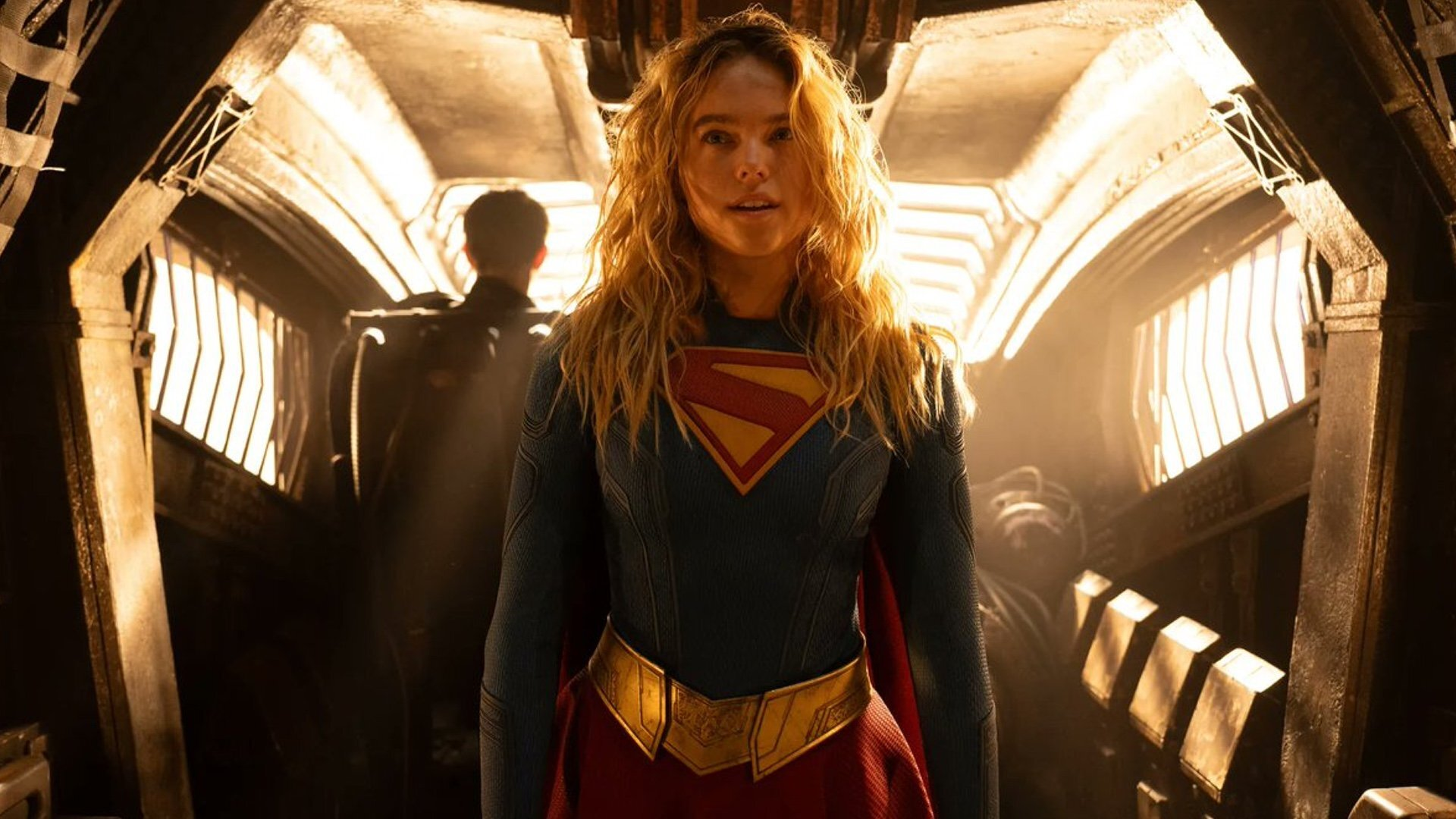
The 29th of June was the day of the premiere of Supergirl in France (it officially released in theaters on the 1st of July here) and I went to watch it. The room was almost entirely full, I was able to hear my seat nighbours debating about how one had given up on the MCU after Thanos as the next Spiderman trailer was showing whilst the other was trying to convince them that some of the movies still happen to be good nonetheless.
I went into this movie with hope and faith, as Superman last year was a breath of fresh air to me. In 2025, Superman was the figurehead of the “hopecore” movement against the rise of machism and hegemonic masculinity overall on social media. It resonated with those against AI slop and anti-immigration movements, portrayed kindness as a punk rock thing that should be where we lead from, and delivered a strong message against illegal occupation of land which could be interpreted as both advocating for Palestine and Ukraine and encouraging the act of fighting against your oppressors.
I also went into it with curiosity — after all, the Co-CEO of DC Studios, James Gunn, said last year in an interview with IGN that “every [DCU] movie [developed] is completely different.”
Superman is not Supergirl, nor is the latter similar to their upcoming slate of films. Supergirl is a space fantasy, whereas the soon to be released Clayface is going to be a rated R body horror movie. Gunn says in the same interview: “It’s really important to me that every project has its own stamp on it.”
Super-Bisexual Supergirl v.s. Superwoke Superman
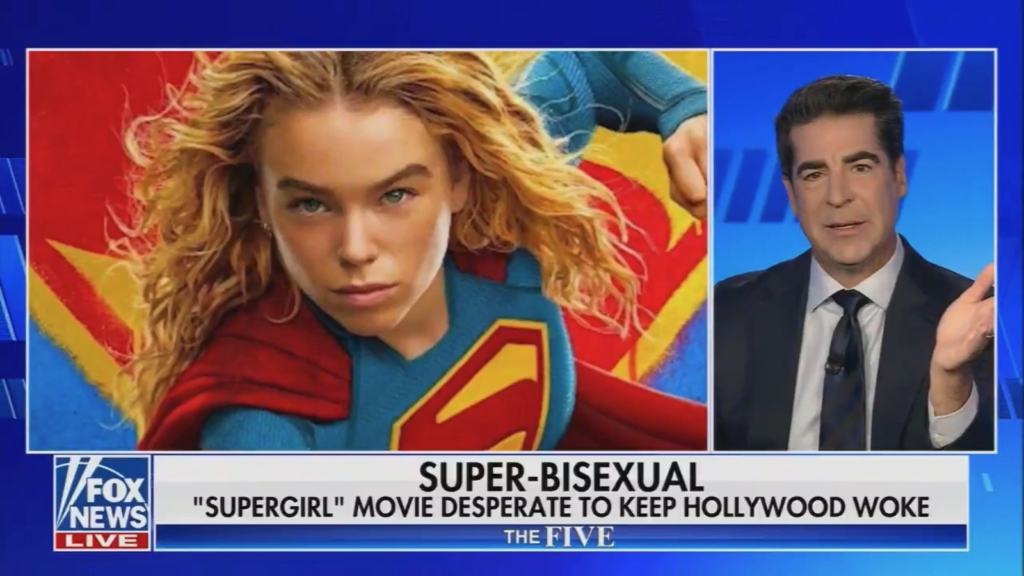
These two characters are two sides of the same coin — both defying gender expectations and gender norms in their own ways. This symmetry between the two characters is perceived even by the mainstream audience, as evidenced by the fact that in conservative media (such as Fox News), they are criticised the same way.
Superman is “Superwoke” for conveying pro-immigrant themes (despite Superman being an immigrant himself since the character’s creation back in the 1930s), and Supergirl is “Super-Bisexual” as they use Alcock’s interview in which she states that Kara “probably goes both ways” (she also states that the movie is not centered around either men or love) to attack the movie and bisexual women overall. In both cases, the characters are merely being used as a vessel for discrimination/hatred against real humans, this time immigrants and queer people.

Aside from Fox News, it was also interesting to hear some feedback from my seat neighbours (yes, again) as the credits were rolling. They were telling each other how they were surprised at Kara being so different from Clark, at her violence versus her peacefulness, essentially comparing the two characters. That is what intrigued me and made me want to look into this further.
Clark defies the concept of what is expected from hegemonic masculinity.
“Hegemonic masculinity is often defined as the most socially prized way to perform masculinity, that is upheld by a patriarchal society that rests not only in power over women, but also power over other forms of masculinity. Hegemonic masculinity prizes a form of masculinity that prioritizes traits such as emotional suppression, aggression, competitiveness, and power. Conformity to masculine norms has been negatively correlated to things such as depression, anxiety, and interpersonal violence.”
— Justin Stoeckle, Denver University
Contrary to the above, Clark is calm, patient, and deeply empathetic — he even saves a squirrel mid-battle in Metropolis. He is a romantic lover, a caring dog sitter for Krypto, Kara’s dog, and a good friend. He does not want to hurt the bad guys who attack him. He is not looking for power; his arc revolves around finding himself through kindness.
In Superman, the superhero who kills the dictator is Hawkgirl (Isabela Merced). She grabs the antagonist and flies him into the sky, where he tells her she would never dare to drop him. She retorts “I’m not Superman” before actually dropping and thus killing him. This is what I think matters the most — just like Hawkgirl, we cannot expect Kara to behave like Clark. Women have their own agency: they can display kindness without being subjugated, and they have the right to want their oppressors gone for good.
Kara struggles with her feelings, her sense of belonging, a dependency on alcohol (which we already got a glimpse of in Superman), and interpersonal connections, which are difficult for her. She also does not hesitate to be violent if it is necessary. Supergirl is, in essence, a coming of age story about a young woman that is (quite literally) an alien, feeling incredibly out of place in the world surrounding her. Just as Superman promotes kindness and human unity over divisions such as borders, Supergirl also promotes positive values about being kind while still being yourself — and about justice.
It may be unsettling to see a superhero acting that ‘coldly’ but would’ve it been a subject of discussion if she weren’t a woman? I doubt it.
The closest movie I can compare it to plot-wise would be Mad Max: Fury Road (2015), since Kara is also fighting against a pedophile ring. Just as the way Superman is explicitly anti-genocide, Supergirl has a strong anti sex-trafficking statement, which is relevant to what we are seeing in the real world with the Epstein files, except in Supergirl, the traffickers actually face consequences for their actions.
A Super Role Model: Why Representation Matters
As stated earlier, Kara’s story in this movie is not romantic or sexual, it revolves around friendship, family, and most importantly: herself. This is also relevant in our current societal climate, as we have seen the rise of ‘Trad-Wife’ content that has flooded Tiktok, Instagram and social media in general. These trad-wives are part of a movement that advocates “a return to traditional gender norms through submitting to their husbands and promoting domesticity,” as explained by Cécile Simmons, a researcher at the Institute of Strategic Dialogue. Contrary to this trend, Kara stands up for herself and demands her own agency.
In an article, Elliot Grove, founder of the Raindance Film Festival and co-founder of the Independent British Film Awards, explains why the rise of female characters matters so much, especially nowadays:
• “Representation shapes reality” and “the impact on future generations”: To see a woman in charge and being a well-written character is a way to inspire the audience, either to educate them or to empower them — as an example, he gives Ripley from Alien (1979), but we can also look to Dana Scully from The X-Files (1993-2002/2016-2018) with the ‘Scully effect,’ where many women became scientists after they watched her on the silver screen. Or with the role of The Doctor in Doctor Who, played by Jodie Whittaker from 2017 to 2022, as her interpretation of the character sparked a renewed interest in the franchise for girls and women.
• “Breaking stereotypes and redefining strength:” It demonstrates that strength is not just physical; it can be demonstrated in many different ways, thus getting rid of the machismo view of a ‘strong woman’ and the notion that being strong for anyone, regardless of gender, means being emotionless and lacking empathy.
• Character complexity: When we have more women as leads playing complex, fully fleshed-out characters, the audience is able to see themselves or their loved ones reflected in these characters and their flaws — just as with Kara — to show growth, development, and a more realistic portrayal of both womanhood and humanity.
• Putting emphasis on women in the creative industries: More women should be employed to tell women’s stories within the industry, which only happens if the movies are being made in the first place. In the case of Supergirl, the script was written by Ana Nogueira, but it would have been nice to see it directed by a woman as well. This allows for a more consistent and realistic approach to female characters — for example, we see this in the difference between the male gaze that Harley Quinn (Margot Robbie) suffers from in Suicide Squad (2016) versus how her character is treated in Birds of Prey (2020), directed by Cathy Yan.
The last point also leads to other groups of marginalized people being able to express themselves more in different parts of the creative industries, which is something that matters just as much.
For instance, to add onto the notion of Kara being a bisexual character, notice the t-shirt that the character wears through most of the movie — a Blondie t-shirt, depicting the singer in the band, Debbie Harry. Not only is Harry a strong role model for women, as she was the only woman and the leader of the band (perhaps a nod to Kara being the lead of the movie) but she is also bisexual, as she discussed in 2014. Although it remains subtextual, this could be interpreted as a nod to Kara’s sexuality as well, thus making of her an example of queer representation in addition to representing women and their strengths.

Did you like Supergirl? What are your thoughts on Kara and/or the state of media representation these days? Leave a comment below!