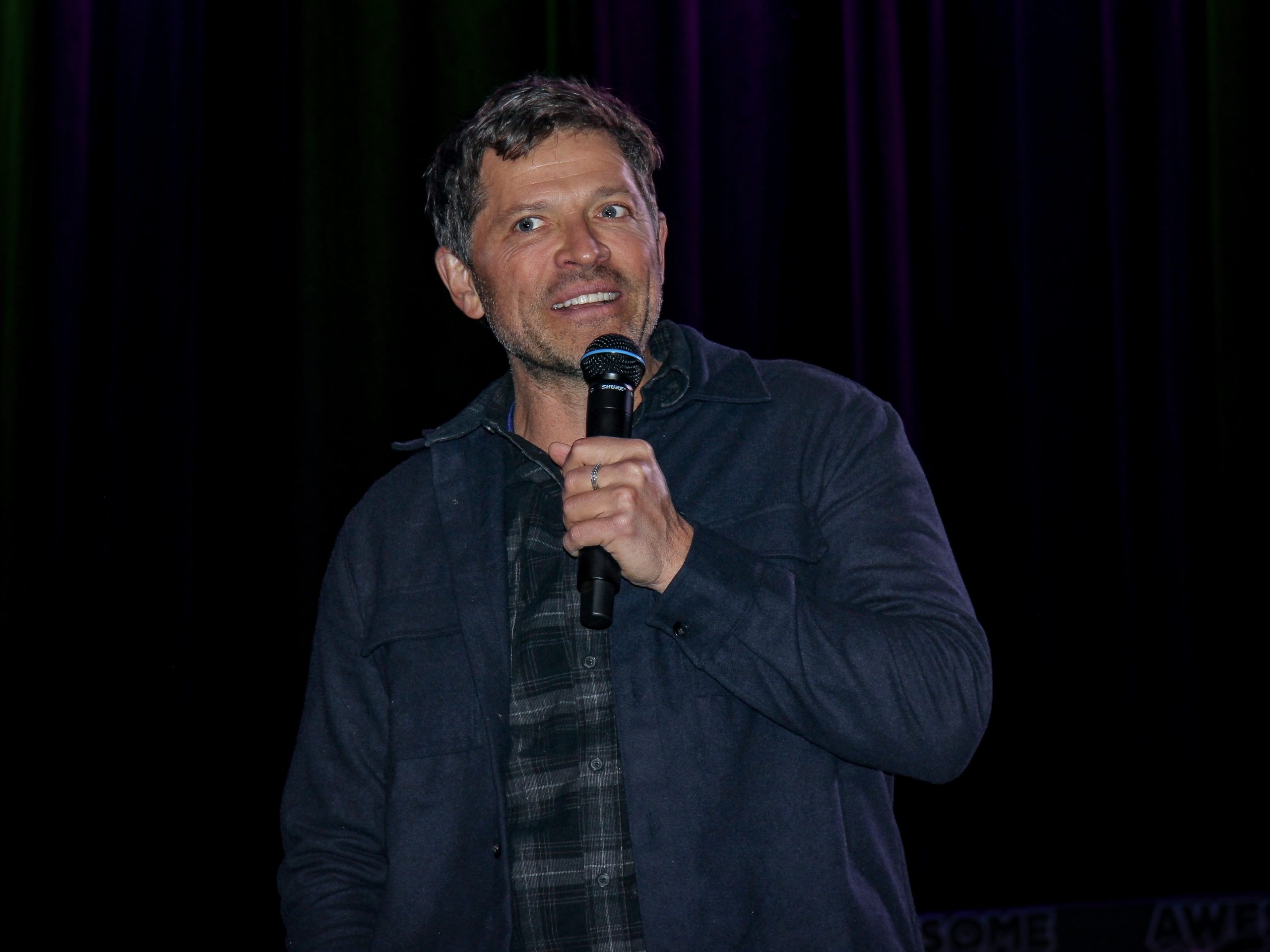
The CW show Supernatural has been off the air since November 2020. It ran for fifteen seasons and 327 episodes, which makes it the longest-running United States live-action sci-fi/fantasy series in television history. It ended with a finale that garnered mixed responses, and yet, on Friday afternoon at Awesome Con last week, the panel for “Supernatural: Family, Fate, and the Road So Far” had a full room as fans crowded in to hear from fan-favorites, Misha Collins and Jim Beaver.
The Supernatural fandom has been gathering like this for almost two decades now, and what it has managed to build in that time is something that most fandoms – most communities – never quite seem to manage in the way they have: a working infrastructure for turning passion into direct action that is accessible to anyone, regardless of class, location, or physical ability.
Queer Legacy and Castiel’s Confession
A fairly significant part of why the Supernatural fandom is the way that it is today can be understood through a scene that aired in the show’s eighteenth episode of its final season.
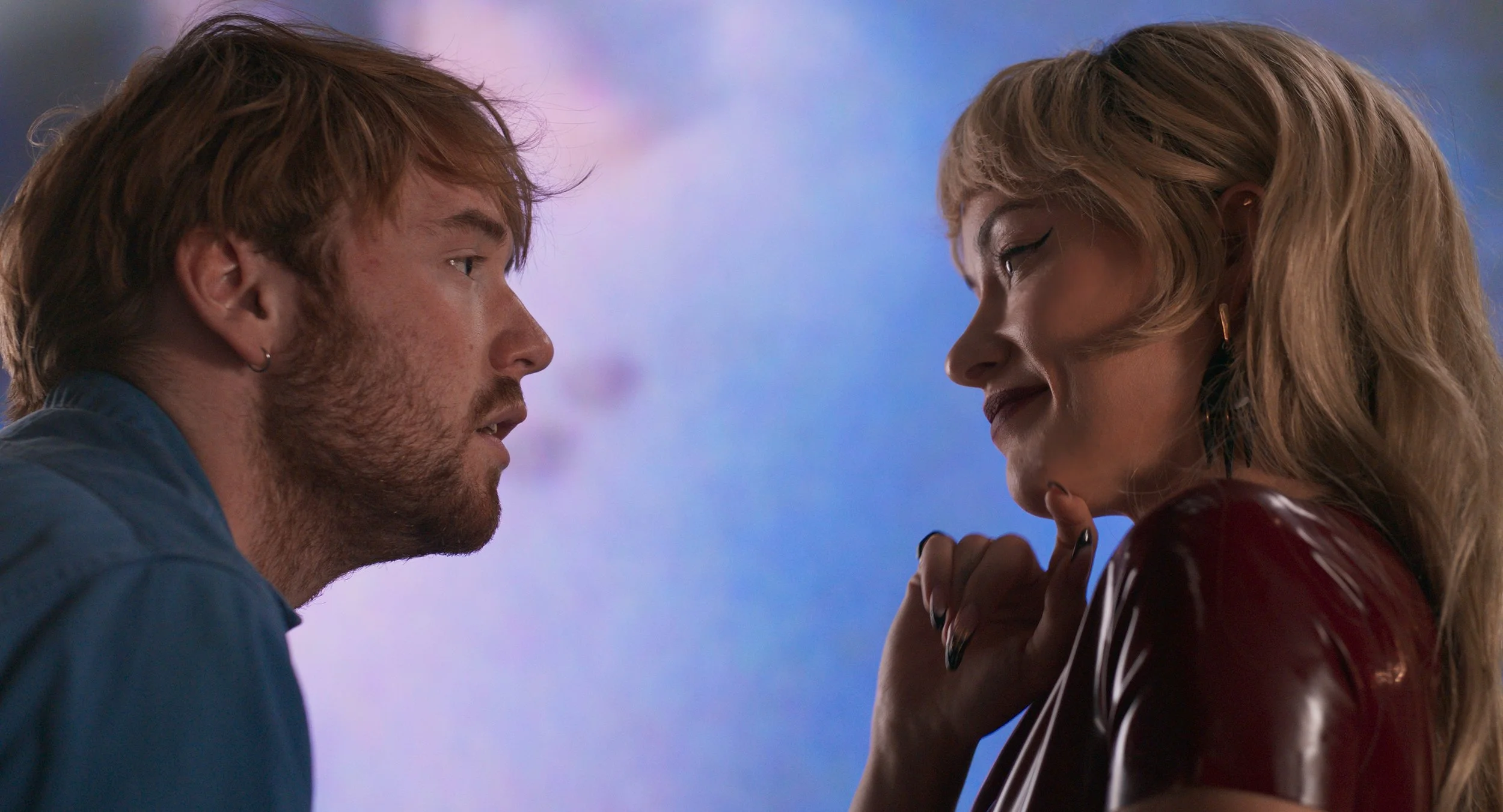
In “Despair,” the angel Castiel – played by Collins across twelve seasons – confesses his love for Dean Winchester. He does so as part of a deal with a supernatural entity called the Empty, which has agreed to take him when he experiences a moment of pure happiness. Castiel tells Dean that loving him, even without it being acknowledged, is what constitutes that happiness for him. He says this as a declaration of romantic love, as confirmed by the writers, director, and Collins himself. He is then immediately taken by the Empty, and Dean does not get the chance to say anything before he is gone – never to be seen onscreen again.
The response to this was a loud enough response that even people who were not fans of the show still vaguely knew the significance of the moment. “Destiel” – the relationship between Dean and Castiel, which was an object of fan analysis and desire for years – had been, prior to that episode, operating in what is called “subtext”: real enough that fans saw it, but not official enough that the show acknowledged it.
The confession scene made it canonical, at least in one direction. It gave the fans and the LGBTQ+ community at large queer representation in a mainstream sci-fi drama, on network television, that was firmly defended by the cast and crew who worked on making it happen. It was not perfect representation by any means, given that Castiel’s confession was answered with silence and followed immediately by his death, but it was representation nonetheless.
For most of the show’s queer fandom, that scene is something to cherish. It wasn’t the first queer love confession we’ve gotten on network television, or even the most satisfying, by any means. But Castiel was their character, in this show they had been so closely invested in, many for over a decade, and the show finally said out loud what they had been saying for years. The relief of having it acknowledged and the mourning of how it turned out still comes up frequently in conversations about the show today, both online and in-person at fan conventions.
The queer community is a community that has historically forged stronger inter-communal bonds and developed more sophisticated systems of mutual aid, due to systemic and societal neglect. Fandoms with higher levels of queer fans tend to reflect the same patterns, and Supernatural is overwhelmingly queer-leaning nowadays, although it was not always that way. This reclamation of space is a fairly recent development after years of ostracizing from heterosexual, homophobic fans.
At Awesome Con, Collins and Beaver spoke about the unique relationship the Supernatural stars themselves have with their fans. The through-line they both kept returning to was that the community the fandom built is real, the actors know it, and they feel a kind of responsibility to it. For Collins in particular, that responsibility has taken on a very concrete form.
Random Acts of Kindness and Fandom as a Pipeline for Activists
I watched Supernatural at the behest of a friend, and like many others I was impressed by the actors, so I looked up their social media. Through that journey, I found out that Misha had started a nonprofit called Random Acts, and having just turned eighteen, looking for somewhere to volunteer my time, I applied for a job there (RA is an all-volunteer run organization) in 2022.
Fast forward to today, and I have served as Random Acts’ Events Manager for almost five years now. I have seen with my own eyes the generosity and kindness of the people within the fandom who consistently show up to support the endeavors we embark on, and from the volunteer staff who put in way more hours than they should into a job they do not get paid for, solely out of their innate drive to do good things and make this world a little bit better.
Sadly, this will be my last year with them, as my obligations to The Convergence Lens grow and the world continues to become more and more unstable under late-stage capitalism. As much as I respect and love what we do at Random Acts – non-profits, because they must work within the system, are still bound by capitalism’s power structures, which are inherently tied to white supremacist and colonialist mindsets.
This is not an indictment of RA in particular, as they have, at least, tried to mitigate the effects of white privilege within the organization, but rather a personal decision and preference for spending my time attempting to help dismantle the current system and build a socialist, people-first society in its place. This is also why we decided that The Convergence Lens will be a worker-owned cooperative, as opposed to a non-profit.
The apolitical requirements that come along with a 501c3 designation in exchange for tax-exempt donations make sense for an organization like Random Acts, but not for us. Not for Collins, either, who doesn’t let his role as RA’s Board President/Founder overlap with or prevent him from doing political advocacy work/activism. No one in the Supernatural populous exemplifies the generosity and kindness mentioned above more than Collins himself – but don’t tell him I said that. His head is big enough. (I’m just teasing, of course. And slightly biased.)
During his recent visit to Washington, D.C. for Awesome Con, he took the time to visit Capitol Hill to film a video calling on members of Congress to vote against the SAVE Act – a piece of legislation that his social media posts described, and that pro-democracy advocates have characterized, as a dangerous expansion of authoritarian government power in the U.S. He also helped boost the convention’s food bank drive, doing what he always does – what all those with an audience should do: using the access and platform that his celebrity has given him to try to make the world a slightly better place.
This, in the context of celebrity and fandom, is fairly unusual. Lots of celebrities participate in the act of charitable giving, but usually at much lower levels of actual time commitment, and usually for PR reasons as opposed to actual desire for fueling change. His dedication is a rarity, for sure, but what is most unusual is the architecture of how Collins has built his platform.
Random Acts is not a “celebrity charity” in the traditional sense. It is not some cobbled together attempt to look good in the public eye while raking in money in private, and I can attest to that as fact from my own experience. It is not free of problems, as most non-profits aren’t, but it is actually run by people whose sole focus is the mission of the organization, as opposed to people looking for an easy check and a cool job. Plus, annual reports are posted each year, if you have questions about how much was made and where the money went.
This is an organization that invites fans of Supernatural and fandom at large into the work themselves by running campaigns and projects that people can participate in from anywhere in the world. These projects treat the fan community as essential forces of community care – forming a volunteer corps for kindness instead of just using them as a constant donor base to pull from. This decision has built a model of engagement among Supernatural fans in which loving the show and caring about the world are, to them, explicitly connected activities.
GISH – the Greatest International Scavenger Hunt, an annual event Collins organized from 2011 to 2022 – became one of the largest scavenger hunts in the world and broke several Guinness World Records, including the most pledges to complete a random act of kindness in 2012, coming in at just under 100k with 93,376 total pledges. The things fans did for GISH over the years were ridiculous, fun, and focused on community connection as well as civic engagement.
This network that GISH and Random Acts – under Collins’ guidance – have developed over the years where strangers meet each other, organize together, and develop a passion for community care has become a foundation for countless individuals over the years that has enabled them to become more involved with political and charitable work in their own lives.
All of the above is what makes the Supernatural fandom a model worth examining, and what makes it distinct from most other large fandoms. The actors are excited to appear at conventions in a way most are not, and the fans look out for each other in ways other fandoms struggle to – albeit not always, and certainly not without their fair share of inter-fandom drama. Those things are worth noting, but beyond that, the community has, through the aforementioned intentional design primarily cultivated by Collins, developed the capacity to act when needed.
Fans show up for voter registration drives, charity fundraisers, mutual aid projects, and now, a new digital community of do-gooders on Substack run by Collins and his fiancée, Emily Farallon, called The AnteSocial. Described as a place to “combine chaos with curiosity, build community, do some good, and have fun along the way,” Collins and Farallon continue to blur the lines between fandom and activism by interviewing politicians and activists, hosting virtual events, encouraging political action, and boosting mutual aid among the community members.
In many ways, this aligns with our mission here at The Convergence Lens – and we started on Substack, too! However, once I learned about Substack’s host of issues, it became apparent that in order to truly live by our stated values, we must migrate to our own site. Substack is very good at keeping their support of white supremacists quiet, or hand-waving it away under the guise of free speech, so I don’t blame Collins or Farallon for not being aware of their practices.
That being said, if they are ever interested in migrating (or you, the reader, are), our community platform launches soon and offers much more than Substack does in terms of organizing a sub-community dedicated to social change. Just saying. 😉
A Supernatural Point of View
During their Awesome Con panel, Collins and Beaver were asked about the endurance of the fandom. What is it about Supernatural that keeps people gathering at events like that, five years after the show’s ending?
As mentioned earlier, the conversation kept returning to the quality of the relationship between the actors and the fans, which was cultivated over almost 20 years of convention appearances (the first Supernatural convention was hosted by Creation Entertainment in 2007) and social media engagement at a level of calculated accessibility that most celebrities currently working in Hollywood would be uncomfortable with and tend to avoid.
That certainly plays a role in it, but from my perspective, the fandom endures for the most part because it has developed into something that exists independently of the show. You can stop watching Supernatural itself and still be part of the SPN Family because the community has taken on a life that is about more than the show. Community care, opportunities for developing lifelong friendships at local (or online) events, and a shared commitment to the idea that love for digital media can mean something beyond just consumption of content – all of that is what makes up Supernatural’s unique model for fandom-as-activism.
In this political moment, when community infrastructure is one of the things most urgently needed, and when the mechanisms for building it are not obvious, this model offers us a case study in how people can turn their passions into advocacy work that seeks to achieve real, tangible change. It makes sense, too – Supernatural is, among other things, a show about fighting monsters, and what bigger monster is there to fight than the authoritarian attempt of the Western World to systematically remove all opportunity for connection in order to maximize corporate profit?
What do you think? Do you agree with my assessment? Let me know in the comments!