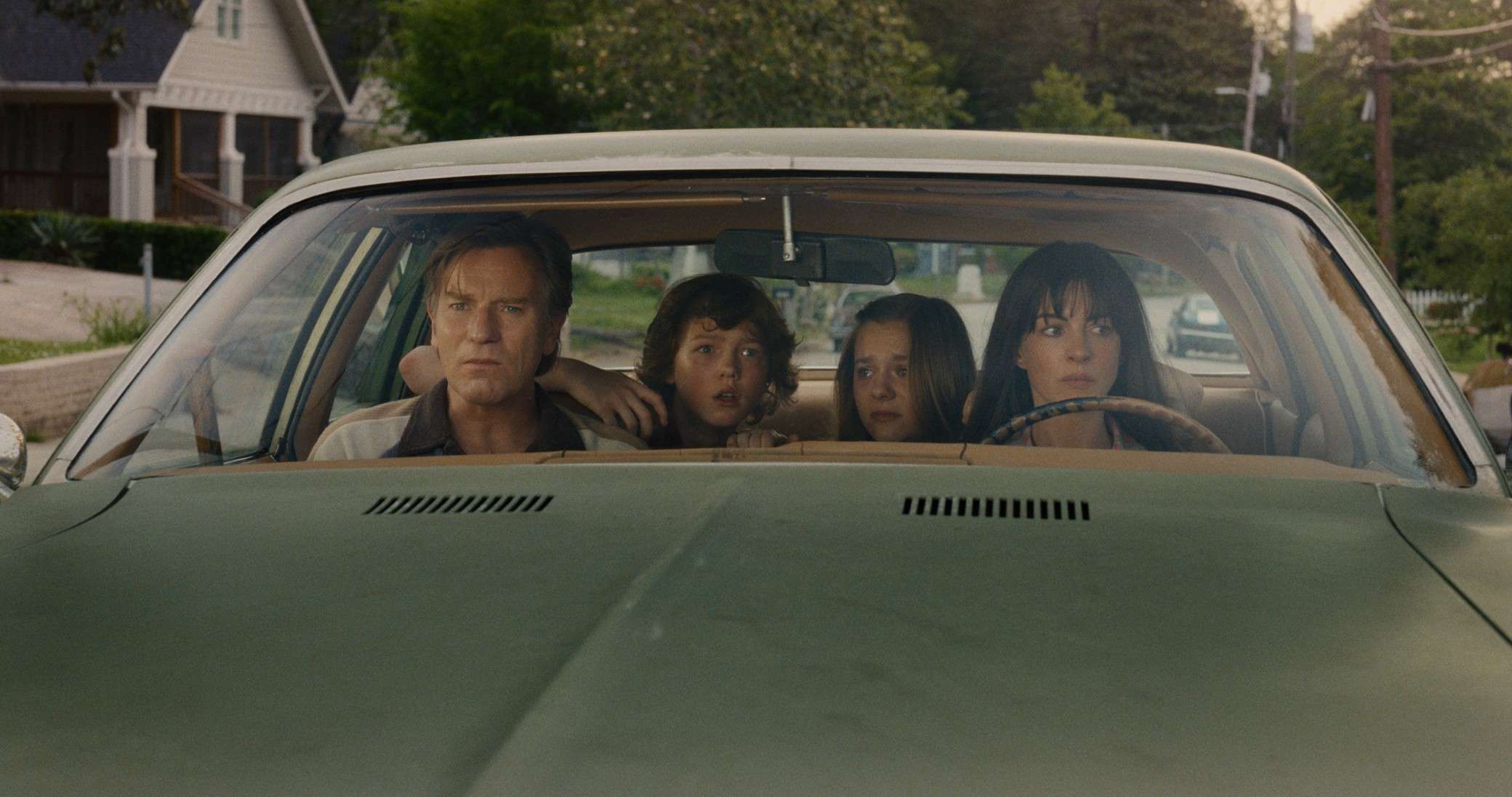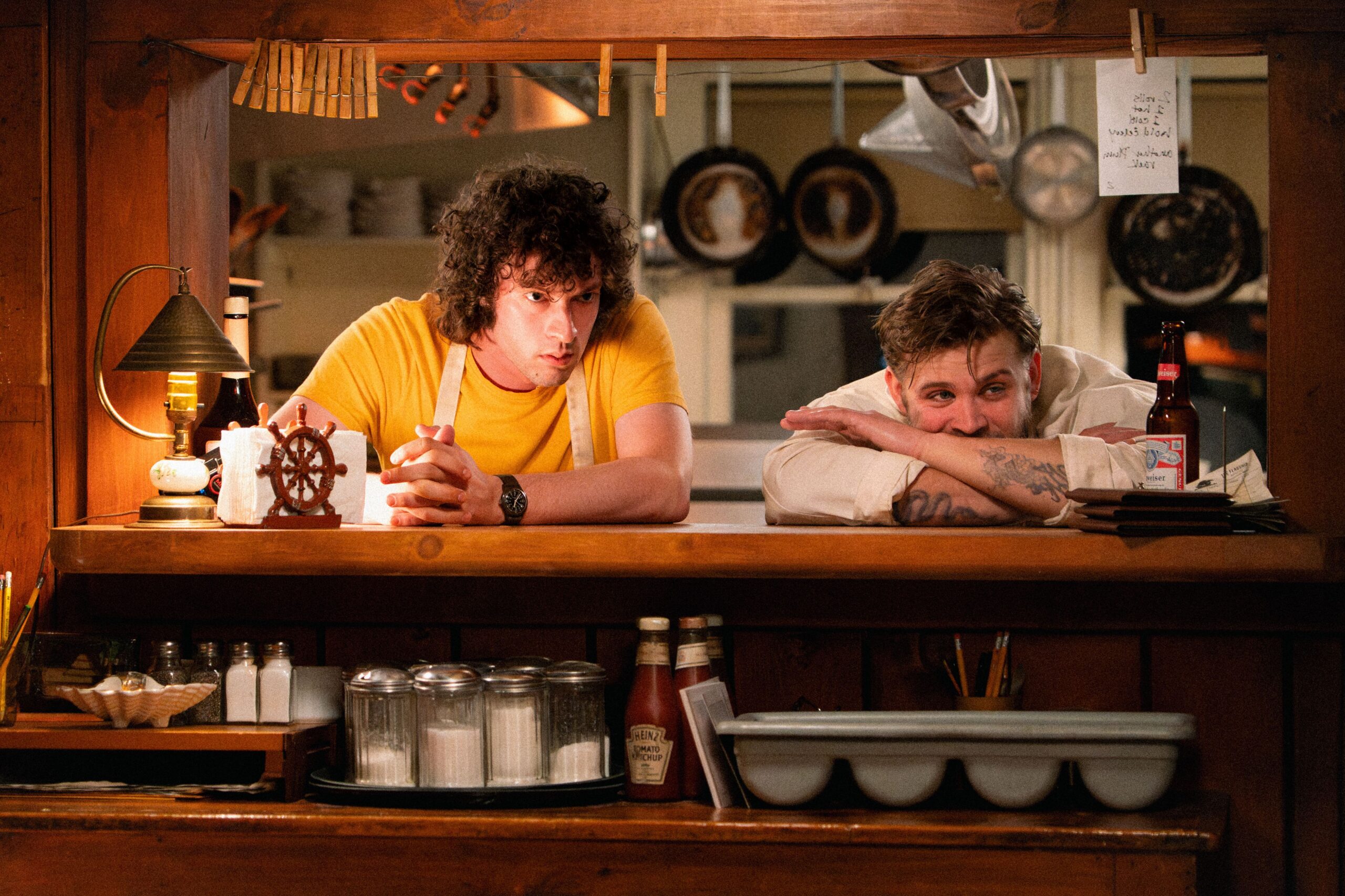
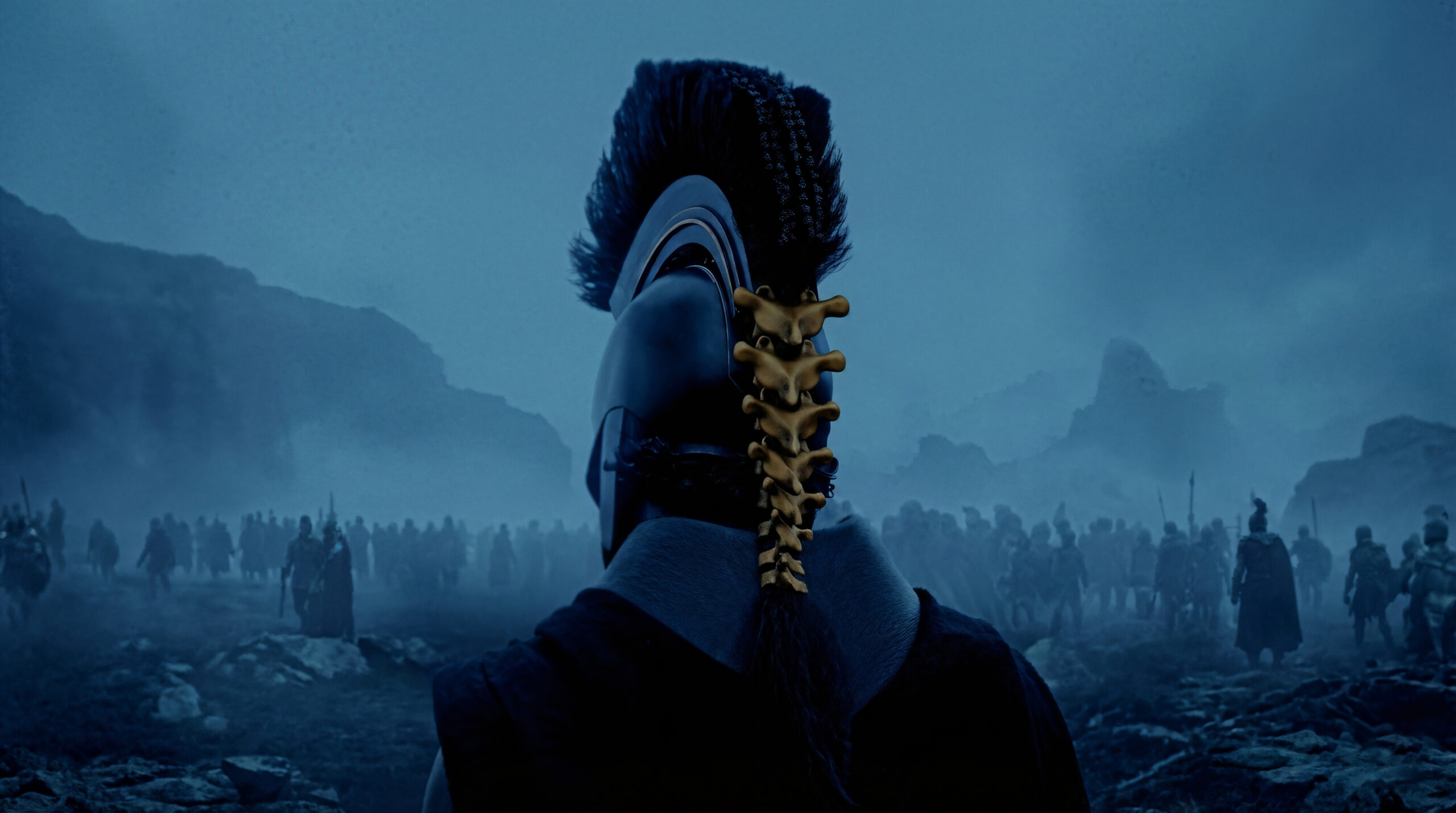
I finally saw The Odyssey in IMAX on Wednesday night (the only available date I could find when buying tickets a month ago), scribbling notes in the dark that I had to struggle to make out once in proper lighting.
My overall verdict: this is a great movie and a mediocre adaptation, carrying an anti-war message that is unmistakably about the horrors of empire, made by a director who cannot quite imagine a world in which empire, in some form, doesn’t exist.
I know it sounds contradictory, but both halves of that sentence are true at once, and the tension between them is the most interesting thing about this film to me.
The Craft Is Not in Question
Let’s get the obvious out of the way first: this is one of the most staggering theatrical experiences I’ve had all year.
Shot entirely on 70mm IMAX film by cinematographer Hoyte van Hoytema, The Odyssey trades in the desaturated, chiaroscuro-heavy palette Nolan has been building toward since Oppenheimer for an almost pastel look, full of bright, natural light in some scenes and candlelit shadows in others. There are shots in this film with tiny human figures dwarfed by desert or sea that made the audience gasp with wonder. Knowing that almost none of it is digital, that these were real people in real locations, only deepens the awe.
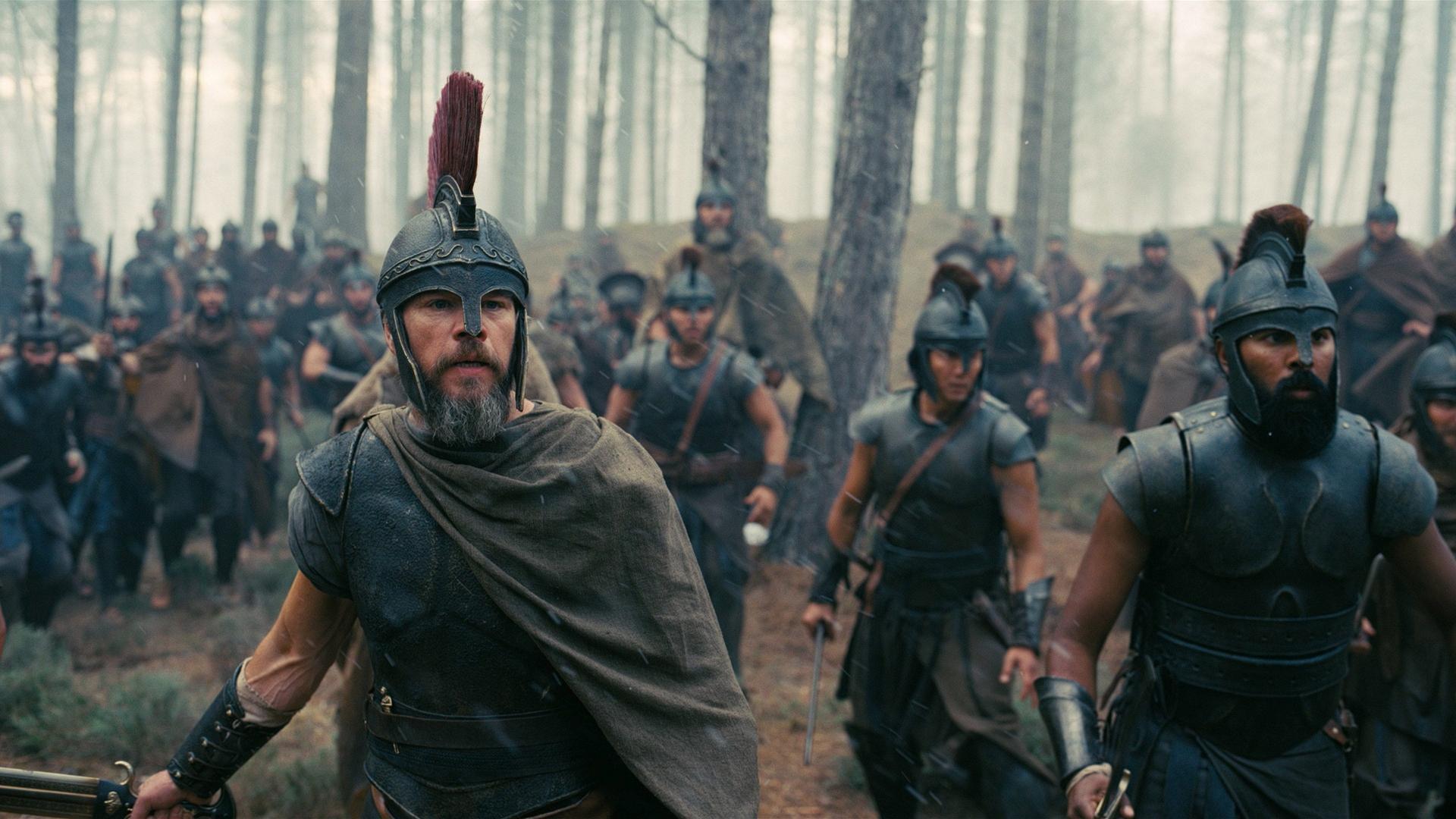
The practical effects are the film’s clearest inheritance from Ray Harryhausen and, more recently, from Guillermo del Toro’s conviction that a monster should have a soul, rather than being a simple narrative tool. The Cyclops sequence, filmed largely in near-total darkness inside a real cave in the Peloponnese, is loud, chaotic, and unnerving. The creature was built as a massive animatronic puppet with its movements guided live on set, giving Matt Damon and the rest of the cast something real to react to instead of a tennis ball on a stick. The close-ups were a real actor in practical makeup. Watching it, I found myself thinking more than once: how the hell did they do that?
The focus pulling did struggle in several low-light scenes. IMAX cameras have a famously shallow depth of field, which makes what is called “deep focus” (where the background and foreground are both clear) difficult, and Nolan shot a huge portion of this film by candlelight. I don’t blame the focus puller, who was clearly working a miracle under brutal conditions. But I did catch it a few times, even if it never fully pulled me out of the film.
My one real design complaint: the Trojan Horse looks too polished, too engineered, for a weapon supposedly built from scavenged wood in a matter of days. I wanted it scrappier. Homemade. A little bit ugly, really. I don’t buy that the crew could’ve put that one together.
Ludwig Göransson’s score, his third Nolan collaboration, ditches the orchestra entirely in favor of dozens of bronze gongs layered with synthesizer, plus research into instruments the actual ancient Greeks might have recognized, such as the aulos, or the lyre. It’s proven divisive among listeners for that reason, but I loved it. It refuses to make the violence beautiful, which feels like the right choice for a film committed to depicting war as ugly rather than triumphant.
Everyone Is Flattened, and Mostly on Purpose
Now, onto the actors.
Every performance here is doing a lot with very little, because Nolan has stripped nearly every character down to a single note. This is true of the white actors and the actors of color alike, and I want to be clear about that now because it matters for what I’m going to touch on in the next section.
Matt Damon’s Odysseus is wonderful, but it’s an achievement built on subtraction. Where Homer’s Odysseus is defined by metis, wit, and the ability to talk his way out of anything, Nolan’s Odysseus barely speaks. He blinds Polyphemus in a silent fit of rage rather than through the famous “Nobody” trick, and he self-medicates with lotus flowers to forget the war rather than the plant being a hazard for his crew, as in the original poem. Classicist Daniel Mendelsohn has observed that Damon’s performance trades the trickster for a traumatized soldier, and that feels like an accurate description to me. Damon plays this version of Odysseus beautifully. I only wish the script trusted him, and us, with more of the cunning abilities that made this character so legendary in the first place.
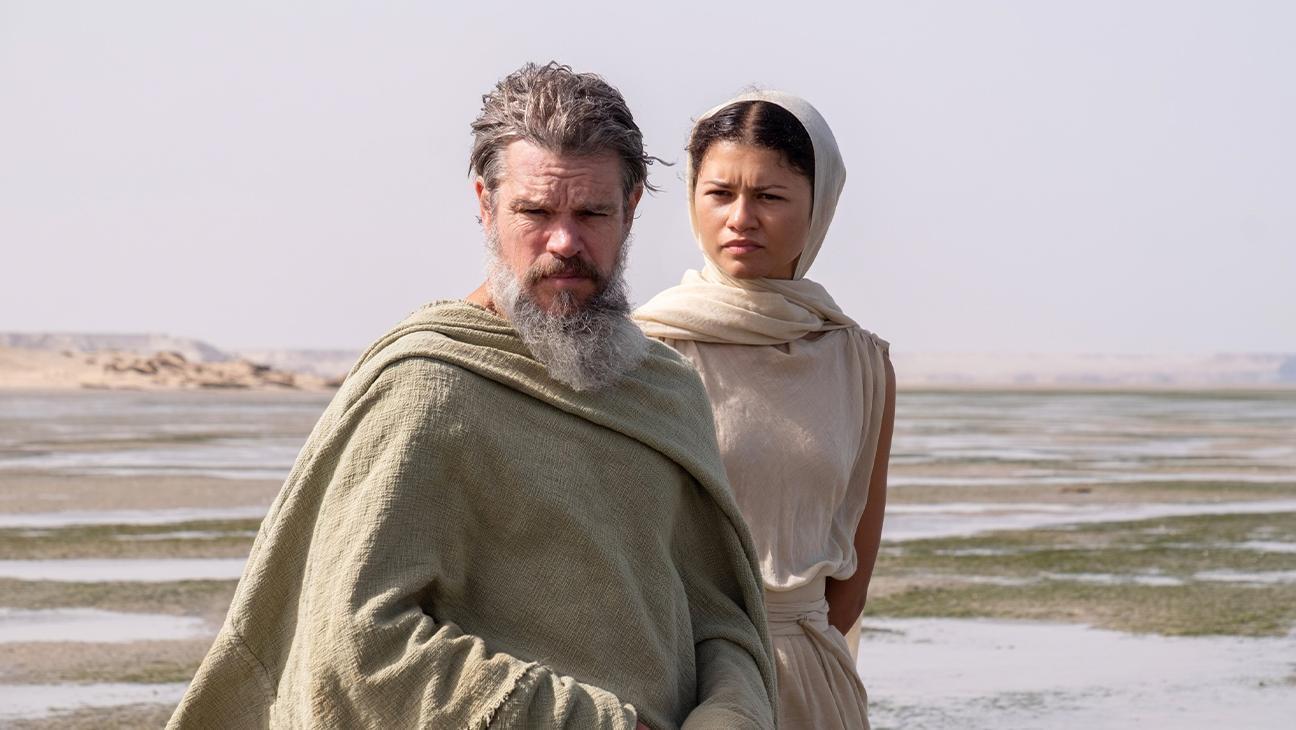
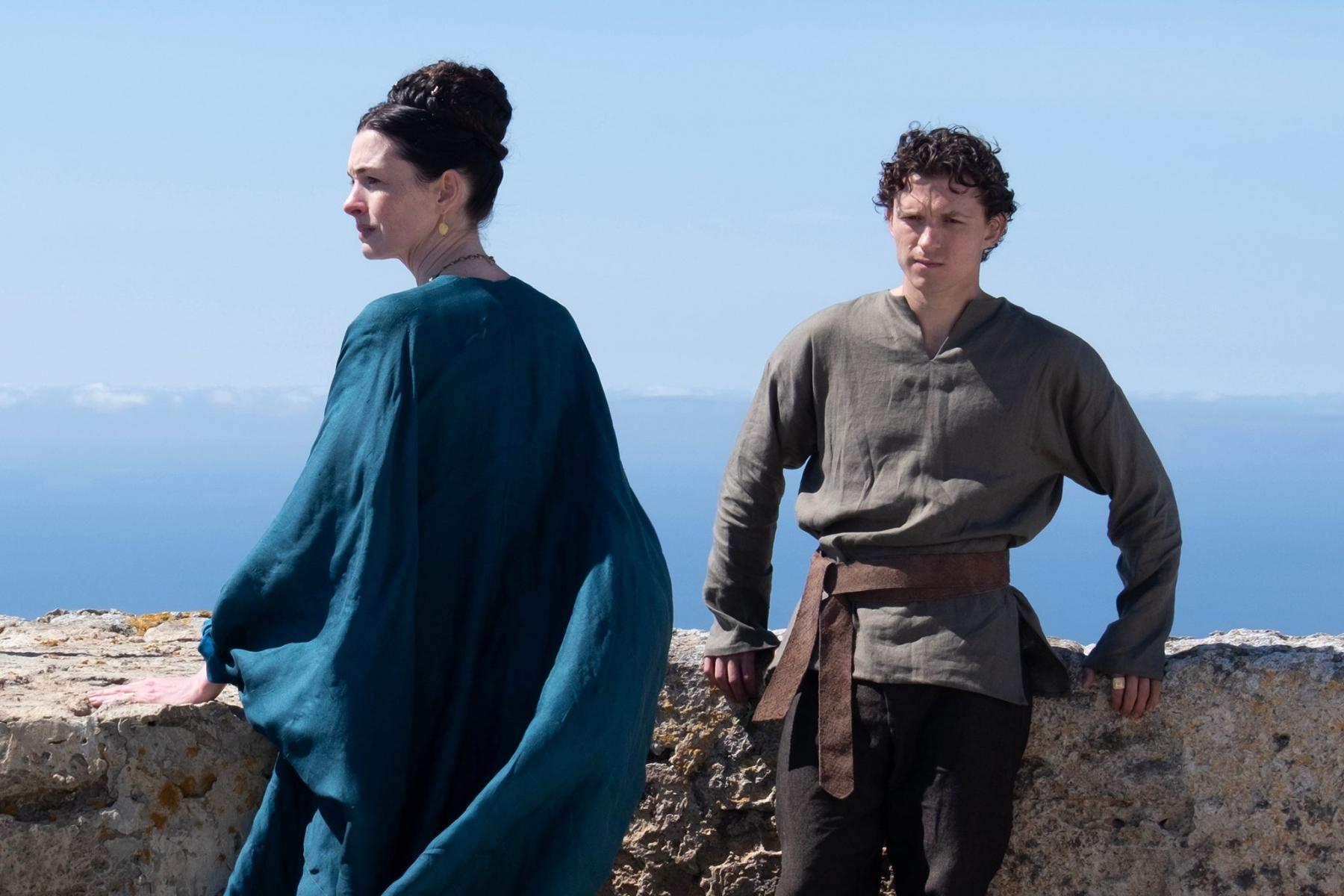
Anne Hathaway is incredible as Penelope. Regal and composed, then quietly devastated in the moments the film allows her to be. I have never understood the “Hatha-hate.” It’s so bizarre to me. She seems wonderful; I would love to interview and perhaps even work with her one day. I admire her so much as an actress, and I think she was amazing in this role. My one note on her performance is the same note I have for Odysseus: I wanted more of Penelope’s intelligence on the page. It’s there; you can feel Hathaway reaching for it, but the writing gives her less room to be cunning than the character deserves.
Tom Holland plays Telemachus’ coming of age with a vulnerable sincerity, and holds his own remarkably well opposite actors with twenty more years of experience. The scene where he recognizes Odysseus, when he realizes his dad is finally home, was the core emotional beat of the film, and he nails it. Absolutely nails it.
Zendaya’s Athena, seen only by Odysseus and eventually revealed as the spectral form of a Trojan priestess who was killed during the sack of Troy, is perfect in her limited screen time, despite not being given much to work with. Nolan secularizes the entire pantheon this way. Zeus and Poseidon never appear on screen at all, only as thunder and rough water on the soundtrack. When Odysseus complains that the gods don’t speak a language mortals can understand, Athena’s reply doubles as the film’s thesis statement: “Who doesn’t understand thunder, fire, a baby’s cry?”
Samantha Morton’s Circe is one of the film’s highlights, no longer a seductress but rather a furious rustic witch who turns Odysseus’s men into pigs out of fear about how little self-control men have. A fear which all women understand with unfortunate clarity. The practical transformation effects here are extraordinary. My notebook, verbatim, from that scene: men are so gross, and this is so cool.
Robert Pattinson, playing the suitor Antinous, is so good at being loathsome — “Get the swords! Get the shields!” is now permanently lodged in my brain. Elliot Page, in a small but pivotal role as Sinon, the Trojan War deceiver borrowed from Virgil rather than Homer, does more with two scenes than some actors manage with twenty.
The one performance I didn’t fully buy is Charlize Theron’s Calypso, though it isn’t really about miscasting so much as under-use. Theron has the presence for the role, but the film gives her almost nothing to work with beyond looking beautiful on a beach. The styling really doesn’t help, either: modern, immaculate brows, visible lip filler, and a look so polished the internet has nicknamed her wardrobe the “burrito blanket.”
When people raise the broader “iPhone face” conversation about historical films, that critique can tip into misogyny fast, and often the fault lies with underfunded productions rather than the actors themselves. However, this is a $250 million Christopher Nolan movie. There’s no budget excuse here. It’s a choice, and it undercuts an actress who has proven, repeatedly, that she can do a great deal more than sit there and look ethereal.
Lupita Nyong’o, playing both Helen of Troy and her sister Clytemnestra, is extraordinary, and the double casting is decent thematic work. It draws a straight line from the abduction that started the Trojan War to the murder that ended Agamemnon’s homecoming, tracing how one cycle of patriarchal violence devastates both the battlefield and the home it was supposedly fought to protect.
Even with limited material, Nyong’o radiates a quiet, exhausted rage in every scene she’s in. You understand instantly and completely that this is a woman who has spent her entire life as somebody else’s pawn, and knows it.
On the “Best Black Friend” and the Limits of a Certain Kind of Critique
I want to address Emily Wilson’s review for a moment, partly because it’s become the loudest single piece of critical writing about this film, and partly because some sections within it did bother me.
Wilson, the classicist whose acclaimed 2017 translation Nolan cited as an inspiration, wrote a scorched-earth pan for the London Review of Books, calling the film’s grandiosity and superficiality damning and arguing it lacks psychological, emotional, and ethical depth.
I don’t disagree with every point she raises. The script is more than thin in places. But, her review as a whole reads to me as fundamentally uninterested in film as its own narrative medium, closer to grading a translation against a translation than watching a movie as a movie.
What really bugged me, though, was her use of the phrase “black best friend” to describe the film’s actors of color as a category. That trope has a specific history and a specific origin. It was named and defined by Black audiences and Black critics describing a particular, tired archetype: a passive supporting character who exists purely to comfort, advise, or amuse a white lead with no interior life of their own.
Applying that label wholesale to Lupita Nyong’o’s Clytemnestra, who murders her husband in an act of revenge for his murder of her daughter, or to Zendaya’s Athena, a walking manifestation of Odysseus’ war guilt, is simply inaccurate on its face. Himesh Patel as Eurylochus is the one character who I feel could even remotely fall under a “best friend” role. Eurylochus is Odysseus’ right-hand man, sure, but he nearly calls for a full blown mutiny and actively defies him on multiple occasions throughout the film. He has internal motivations, but he is a supporting character, and at the end of the day, it is Odysseus’ story. That’s just how stories work.
Plus, he’s not black, and therefore cannot be playing a version of the “black best friend.” Yes, other POC do experience similar experiences of tokenization and tropification in Hollywood, but language matters. There are better ways to communicate criticism around Nolan’s flat characterization than co-opting language that belongs to black people.
I’m not the only one who caught this. Film critic and creator PHZ-Sicks put out a sharp response breaking down how badly that framing misreads the material, calling it “the film critic equivalent of the misuse of AAVE,” language borrowed for credibility by someone without a real grasp of what it means.
As he points out, it’s a never-ending cycle of being reminded that we are always considered outsiders, from all sides of the political spectrum. From one direction, actors of color in a classical epic get told they don’t belong in the story at all. From the other, their presence gets treated as automatically insufficient unless it’s doing explicit political labor, on a stopwatch, under audit. Both positions deny these actors the thing every other actor in this film gets by default: the freedom to just be a character.
As I said earlier, every character in this film is flattened, reduced, and stripped down to a single dramatic function, the white ones included. I don’t believe Nolan would have written these roles any differently if they’d been played by white actors. This is the entire aesthetic of his adaptation, stripped-down archetypes as vessels for an allegory about modern war. You can absolutely argue that this choice doesn’t serve these characters well. That’s a fair and useful critique. But it’s a different critique than the one Wilson made, and conflating the two does a disservice to both arguments.
Zeus’ Law, or: We Are the Sea People
The moral architecture of this film runs on what the script calls Zeus’ Law, the ancient concept of Xenia, the sacred obligation of hospitality between guest and host. Every atrocity in the film violates it. The sack of Troy violates it: Odysseus’s crew is welcomed into their home and repays that welcome with slaughter. The suitors violate it, occupying Penelope’s house and eating her out of hearth and home for years while she waits for a husband she isn’t sure is still alive.
Nolan states this concept so bluntly, so repeatedly, in the film’s first act that I was genuinely baffled to see audiences online asking what’s stopping the suitors from simply seizing the throne by force. It’s explained. Repeatedly. It’s called Zeus’ Law.
Watching the sack of Troy, I couldn’t stop thinking about footage I’ve seen coming out of Gaza and Iran, atrocities my tax dollars as an American are funding right now. I’m not making a claim about Nolan’s conscious intentions; I don’t think he sat down trying to make ancient Troy into an allegory for the Nakba specifically. But the structure is identical: a group of people welcomed a gift into their home, and that gift became the instrument of their destruction. That is what happened to the Palestinian people in 1948, and what continues to happen today.
There’s a passage in Richmond Lattimore’s introduction to his Odyssey translation that touches on the concept that Nolan ran with — Odysseus and his crew being the sea people. Discussing the false, self-inventing stories Odysseus tells about his own past once he’s finally home, Lattimore notes that one of them, the tale told to the swineherd Eumaios about a disastrous raid on Egypt, reads like an account of one of the historical raids by the so-called Peoples of the Sea, the loose Bronze Age confederation of raiders and refugees widely blamed for helping collapse the palace civilizations of the eastern Mediterranean around 1200 BCE. Lattimore highlights a line on how Odysseus operates throughout the poem: “He knew how to say many false things that were like true sayings.”
Homer’s own text already contains the admission that its hero and his men were, in some sense or in some interpretations, the Sea People. They were the chaos that other civilizations feared. We are the sea people. This story is about us, and it always has been, buried inside the poem’s own fictions about itself.
An Anti-Imperialist Film From Someone Who Can’t Imagine a World Without It
Zeus’ Law — hospitality as a universal, sacred obligation — functions in this film as an allegory for our modern liberal international order: a set of supposedly universal rules applied selectively and hypocritically by whoever holds power. The film is pretty clear on this point. It knows the suitors are violating a sacred law, and that Odysseus violated the exact same law first, but was labeled a hero for it.
What the film does with that knowledge, on the other hand, leaves much to be desired. It never imagines an alternative to the rules-based order itself. It only imagines a version of that order applied more honestly, by the “right” person. The end of the Mycenaean world, the historical Bronze Age Collapse this film gestures toward, is depicted as something close to the end of civilization itself, as opposed to one political arrangement ending while something else begins.
Sound familiar? It’s the same anxiety currently animating a lot of propaganda and nervous commentary about the fraying of the postwar liberal order: the assumption that if this particular imperial architecture falls, nothing but chaos follows.
That anxiety is what shapes the film’s entire climax. The slaughter of the suitors is framed as necessary and restorative. Odysseus becomes the compromised operator who has to do something violent and morally ugly so that his son, Telemachus, can take the throne with clean hands.
That’s the exact logic every empire uses to justify itself: someone has to make the hard, dirty choices so the next generation can rule without them. Nolan can see that the current order is hypocritical, but he cannot picture what comes after it. His only solution is a better-run version of the same thing, administered by someone with a guiltier conscience.
I don’t think this is a conscious political program on Nolan’s part. I think it’s closer to a limit of imagination, the boundary of what a straight white man who has been, by his own history, a fairly conventional political moderate can actually picture as a livable future. He can render the horror of empire in exquisite, unbearable detail; he simply cannot picture life outside its walls.
The Occupation Behind the Camera
I would be remiss not to mention the biggest real-life critique here, one that has nothing to do with the story on screen and everything to do with how it got made.
Roughly four days of this film, the Calypso material and some of the Trojan Horse beach sequences, were shot near Dakhla, in Moroccan-occupied Western Sahara. By multiple accounts, this is the first major Hollywood production to film there. Western Sahara is classified by the United Nations as a non-self-governing territory. The Sahrawi people have been fighting for their right to self-determination since Spain’s colonial withdrawal in 1976, and Morocco’s occupation has been condemned repeatedly by international courts, most recently by the Court of Justice of the European Union, which ruled in 2024 that any economic activity in the territory requires the consent of the Sahrawi people specifically, not simply the population currently living there under occupation.
Nolan filmed with the permission of the occupying power. Not the Sahrawi. The Western Sahara International Film Festival spent a year trying to reach Nolan and his production before going public, and Sahrawi filmmakers, journalists, and human rights advocates, alongside an open letter signed by figures including Javier Bardem, have accused the production of legitimizing an occupation that has displaced generations of people, maintains the longest active minefield on Earth, and continues to generate documented human rights abuses. Neither Nolan nor Universal has publicly responded.
This decision confirmed the film’s own thesis in a way I don’t think Nolan intended, but I am disappointed in nonetheless. A movie about the sacred, violated law of showing up as a guest in someone else’s home was partly shot by showing up as a guest in someone else’s home, with the consent of everyone except the people whose home it actually is. If Zeus’ Law means anything at all, that’s a clear violation of it. The film’s moral seriousness doesn’t extend to its own production, and the irony is that this violation is the film’s core argument, playing out one more time, in real life.
That being said, I do not think the general American public was even remotely aware of this ongoing occupation before this film and this conversation. Whilst I would prefer that Hollywood steer clear of this kind of exploitation of the Global South in general, I can only hope that the media attention will end up benefiting the Sahrawis in their struggle for independence.
Final Thoughts
I liked this movie. I’ll probably see it again. As I have repeatedly said, it’s a great film and a mediocre adaptation, and I don’t think those two things necessarily cancel each other out, although anyone hoping for a faithful, one-to-one translation of Homer’s poem should probably skip it entirely. That was never on offer, and I’m honestly not sure a single film could ever deliver that level of faithfulness from a twelve-thousand-line oral epic.
I respect this movie enormously as a piece of artistry. I respect how many hands built it, how committed it is to practical craft in an industry that has mostly abandoned that commitment, and how seriously it takes the horror of war even when its politics don’t go nearly far enough. Christopher Nolan remains one of the only directors working at this scale who still believes cinema should be built by hand.
I just wish, to be completely honest, that he’d let someone else write the words. You don’t need to be a writer-director, Chris. Find someone brilliant to write you a script that compliments and elevates your immense directorial talent.
4.0 out of 5.0 starsThe Odyssey is currently playing in theaters nationwide in the USA.
Rated: R, for violence, language throughout, and sexual material.
Run Time: 173 minutes.