
Fan discourse is laughably predictable. A male character commits genocide, betrays his friends, destroys everything he claimed to protect, and fans still craft elaborate essays about his tragic backstory and inherent goodness. Meanwhile, a female character makes a single questionable decision while under extreme duress, and the comments fill with calls for her death, accusations of irredeemable evil, and detailed explanations as to why she deserves no sympathy.
This pattern repeats across fandoms with undeniable consistency. The internet’s collective memory becomes remarkably selective when it comes to fictional wrongdoing, extending infinite patience to some characters while denying basic humanity to others. The criteria for who deserves redemption versus who deserves condemnation reveals the uncomfortable truth about how bias still operates in these spaces that claim to value justice and representation.
Fandom’s redemption politics determine who gets to be complex, who gets to make mistakes, and who gets to grow. The answer says far more about the audience than the characters themselves.
The Architecture of Fan Forgiveness
Redemption arcs have become central to modern storytelling, but their reception in fan communities follow predictable patterns that have little to do with narrative structure and everything to do with social bias. The fans who write thousand-word defenses of a male character’s “morally gray” choices often dismiss female characters from the same piece of media as irredeemably evil for far lesser transgressions.
These mechanisms of fan forgiveness operate through selective memory, context minimization, and intent attribution. Male characters’ harmful actions get reframed as products of trauma, manipulation, or noble intentions gone wrong. Their victims get forgotten or recharacterized as equally culpable. Their motivations are psychoanalyzed and sympathized with. Female characters receive no such generosity.
This isn’t necessarily conscious misogyny (in most cases), but rather the unconscious application of different standards based on deeply internalized biases about gender, power, and moral authority. The same fans who pride themselves on progressive values and inclusive representation often reproduce the exact hierarchies they claim to oppose when evaluating fictional characters.
The pattern becomes clear when examining how fandoms discuss specific characters who have committed similar actions but receive vastly different treatment based on their gender, race, or position in social hierarchies.
The Maternal Paradox: Mary Winchester
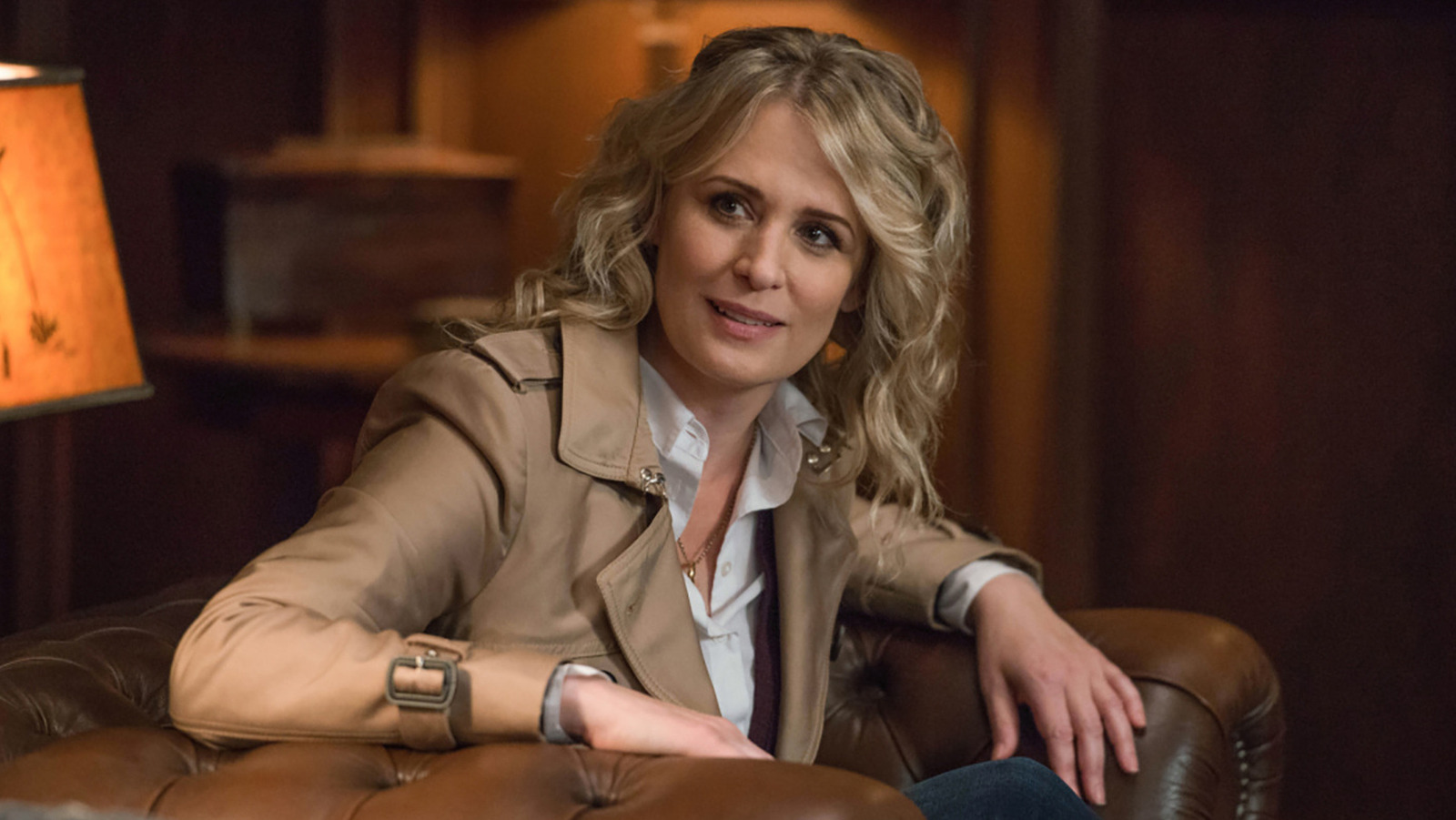
Mary Winchester from “Supernatural” represents one of the most telling examples of how fandom treats female characters who fail to meet impossible standards. When Mary returns from the dead after decades, she’s expected to seamlessly resume her role as perfect mother to two adult sons she never got to raise. When she struggles with this impossible situation, trying to rebuild relationships with strangers who happen to be her children (children who are now older than she was when she died) while processing her own trauma and lost time, fans turn vicious.
Mary’s every action gets scrutinized through the lens of maternal failure. Her attempts to maintain independence and agency are read as abandonment. Her struggles with intimacy and connection are framed as selfish cruelty. Her collaboration with the British Men of Letters – a desperate attempt to create a safer world for her sons – becomes an unforgivable betrayal in fan discourse.
Compare this to how fans discuss John Winchester, whose actual abandonment, emotional abuse, and dangerous parenting receive justification. John’s failures are attributed to grief and impossible circumstances. His harmful actions get reframed as misguided love. Mary’s far less damaging choices get no such charitable interpretation. Even if John is still widely condemned by fandom – and he most definitely is – there are still excuses made for his behavior.
Mary, to many, is evil incarnate, but the man who abused his kids? Well, at least he was trying his best.
This double standard proves how fandom reinforces cultural expectations about motherhood while excusing paternal failure. Fathers who try and fail deserve sympathy; mothers who struggle under impossible expectations deserve condemnation. The very fact that Mary attempts to be more than just a mother, to have her own identity, goals, and relationships, becomes evidence of her moral failure in fan discourse.
The Impossibility of Female Power: Cersei and Daenerys
Game of Thrones provided us with multiple examples of how fandom treats female characters who wield power differently than their male counterparts. Cersei Lannister and Daenerys Targaryen represent opposite approaches to female authority: one operating within existing power structures, the other attempting to transform them, yet both receive far harsher judgment than male characters who commit similar or worse acts.
Cersei’s cruelty and manipulation get treated as evidence of inherent evil, while Tywin Lannister’s identical behavior gets framed as strategic brilliance. Both characters use violence to maintain power, sacrifice others for political gain, and prioritize family over broader ethical concerns. The difference in fan reception has nothing to do with their actions and everything to do with how power is supposed to look.
Tywin’s cold calculation gets read as masculine competence; Cersei’s identical behavior gets read as feminine hysteria. Tywin’s protection of family legacy gets celebrated as paternal duty; Cersei’s identical motivation gets dismissed as selfish obsession. The same fans who admire Tywin’s political acumen condemn Cersei for employing identical tactics.
Daenerys presents an even more revealing case study. Her journey from powerless victim to competent ruler should represent the kind of character development that fans celebrate. Instead, her accumulation of power was treated with increasing suspicion and hostility. Every use of her authority is scrutinized for signs of impending tyranny, while male characters who commit identical acts of violence – or worse – receive no such skeptical analysis.
The turn to “madness” in the show’s final season was treated as inevitable by fans who had been building the case against Daenerys for years. Her previous acts of liberation are suddenly reframed as early signs of instability. Her struggles with isolation and betrayal are minimized as character flaws rather than understandable responses to impossible circumstances. I pray George does not go this route in the books, as it has now been established that the general public’s media literacy skills are not strong enough to overcome deep-rooted misogyny.
The Purity Trap: Rhaenyra Targaryen
House of the Dragon’s Rhaenyra Targaryen demonstrates how fandom applies different standards to female characters from the very beginning of their arcs. Even before committing any significant moral compromises, Rhaenyra faces criticism for behaviors that would be celebrated in male characters – ambition, sexual agency, political maneuvering, and refusal to accept subordinate roles.
The discourse around Rhaenyra is the perfect example of how female characters end up trapped in impossible binds with audiences. If she’s too passive, she’s weak and boring. If she’s too active, she’s aggressive and unlikable. If she follows the rules, she’s naive and ineffective. If she breaks them, she’s dangerous and untrustworthy. The goalposts shift constantly to ensure that female characters can never quite achieve the level of fan sympathy extended to their male counterparts.
Rhaenyra’s romantic and sexual choices receive scrutiny that male characters never face. Her relationships are analyzed for signs of manipulation or poor judgment, while male characters’ identical behaviors are ignored or even celebrated. Her political decisions get second-guessed while male characters’ similar choices are defended as a strategic necessity.
Aegon II’s far worse behavior is rationalized or ignored while Rhaenyra’s minor moral compromises are treated as major character flaws. The fans who defend male characters’ rights to power and revenge deny Rhaenyra the same considerations without thinking about why that is.
The Intersectionality of Character Bias
Gender isn’t the only factor determining who gets redeemed in fandom – race, class, sexuality, and other identity markers all influence how characters are received. Characters who exist at the intersection of multiple marginalized identities face compounded bias that makes redemption nearly impossible, regardless of their actual actions.
Female characters of color, particularly Black women, face heavy scrutiny, with their actions being interpreted through racist stereotypes about aggression, irrationality, and moral corruption. Queer characters are often reduced to their sexuality, with their complexities flattened into simple narratives about deviance or tragedy. Working-class characters are denied the psychological complexity routinely granted to aristocratic ones.
The intersection of these biases creates hierarchies of worthiness that have nothing to do with narrative merit and everything to do with social power. Characters who most closely resemble the dominant demographic groups (white, male, middle-class, heterosexual) receive the most generous interpretation of their actions. Characters who deviate from these norms face increasingly harsh judgment.
The Psychology of Selective Empathy
The differential treatment of characters tells us that empathy operates as a political act rather than a natural emotional response. Fans don’t automatically empathize with all characters equally; they extend empathy selectively based on identification, projection, and social conditioning.
Male fans often identify more easily with male characters, leading to greater empathy for their struggles and a more charitable interpretation of their actions. This identification creates emotional investment in defending these characters against criticism. Female characters who challenge male power or represent different approaches to problem-solving are treated as threats rather than protagonists worthy of empathy.
The psychology behind all of this becomes even more complex when considering female fans who also participate in the differential treatment of female characters. Internalized misogyny leads some women to hold female characters to higher standards than male ones, expecting women to be morally superior while excusing male characters’ failures. The phenomenon of “not like other girls” extends to character preferences, with some fans distinguishing themselves by rejecting female characters that other women support.
The Redemption Economy
Fandom operates according to an informal economy of redemption where some characters accumulate moral capital while others face perpetual debt. Male characters start with a higher baseline sympathy and can weather significant moral failures while maintaining fan support. Female characters start with a lower baseline of sympathy and can be permanently condemned for relatively minor transgressions.
The economy operates through collective memory and community consensus. Male characters’ positive actions get remembered and emphasized, while their negative actions get forgotten or minimized. Female characters’ negative actions get remembered and emphasized, while their positive actions get forgotten or re-contextualized as manipulative or self-serving.
This selective memory creates feedback loops where popular characters become more popular and unpopular characters become more unpopular, regardless of their actual narrative development. The initial bias determines the trajectory, and community discourse reinforces the predetermined conclusion.
The Creator’s Dilemma
Writers and creators often find themselves trapped between their artistic vision and fan expectations shaped by these biases. Female characters who were written as complex, flawed protagonists are perceived as irredeemable villains. Male characters who were written as morally questionable get elevated to hero status solely through fan interpretation.
Some creators attempt to course-correct by making female characters more overtly sympathetic or by having male characters explicitly acknowledge their flaws. But these heavy-handed approaches often backfire, feeling forced or unnatural within the narrative. The problem lies with the audience’s differential interpretation of identical character traits and actions, and until a solution address that, they’re half-measures.
Some creators do learn to anticipate these biases and structure their narratives to account for them. This could mean providing more explicit context for female characters’ actions, having other characters defend them against criticism, or creating situations where the double standard becomes obvious to audiences.
Beyond Individual Preference
The patterns in fandom redemption politics can’t be dismissed as individual preference or subjective taste. When the same biases appear consistently across different fandoms, genres, and demographics, they indicate a systematic rather than personal phenomena. The problem isn’t that some fans happen to prefer certain characters; no one is saying you have to love every female character. The problem is that the preferences overwhelmingly follow patterns based on social bias.
Understanding these patterns requires moving beyond individual psychology to examine our cultural structures and power dynamics. The same hierarchies that operate in broader society are being reproduced in fandom spaces, often by people who consider themselves progressive and inclusive.
And again, recognizing these patterns doesn’t require giving up personal preferences or forcing appreciation for disliked characters. It requires acknowledging that preferences aren’t formed in a vacuum and that systematic bias influences how we interpret fictional characters just as it influences how we interpret real people.
Moving Toward More Equitable Interpretation
Developing a cultural norm where there is more equitable character interpretation across the board requires conscious effort on all of our parts to recognize and counteract bias. This means applying the same standards to all characters regardless of gender, race, or other identity markers. It means extending the same charitable interpretation to female characters that male characters routinely receive. It means questioning why certain characters provoke stronger negative reactions than others.
The work happens at both the individual and community levels. Individual fans can practice more conscious consumption, questioning their own reactions and examining whether they’re applying consistent standards. Fan communities can establish norms that discourage differential treatment and encourage more thoughtful analysis.
The goal is to ensure that criticism and praise are distributed fairly based on actual actions and character development rather than social bias and identity-based assumptions.
The Stakes of Fictional Justice
The way fandom treats fictional characters does matter, because it reflects and reinforces how society treats real people. The same biases that prevent female characters from receiving redemption operate against real women seeking forgiveness, second chances, and understanding of their choices and circumstances.
When fans consistently apply harsher standards to female characters, they normalize the expectation that women must be morally superior to men to deserve the same consideration. Fictional characters may not have feelings to hurt, but the conversations about them shape the cultural values that determine how real people get treated.
Honestly, this whole conversation isn’t about the characters, not really – it’s more about us. The grace we extend to fictional people reflects the grace we’re willing to extend to each other, and the standards we apply to imaginary actions reveal the standards we hold for real ones.
So, who gets to be redeemed in fandom? Right now, not everyone.
But that can change if we’re willing to examine our biases and extend equal humanity to all characters regardless of who they are or what they represent.