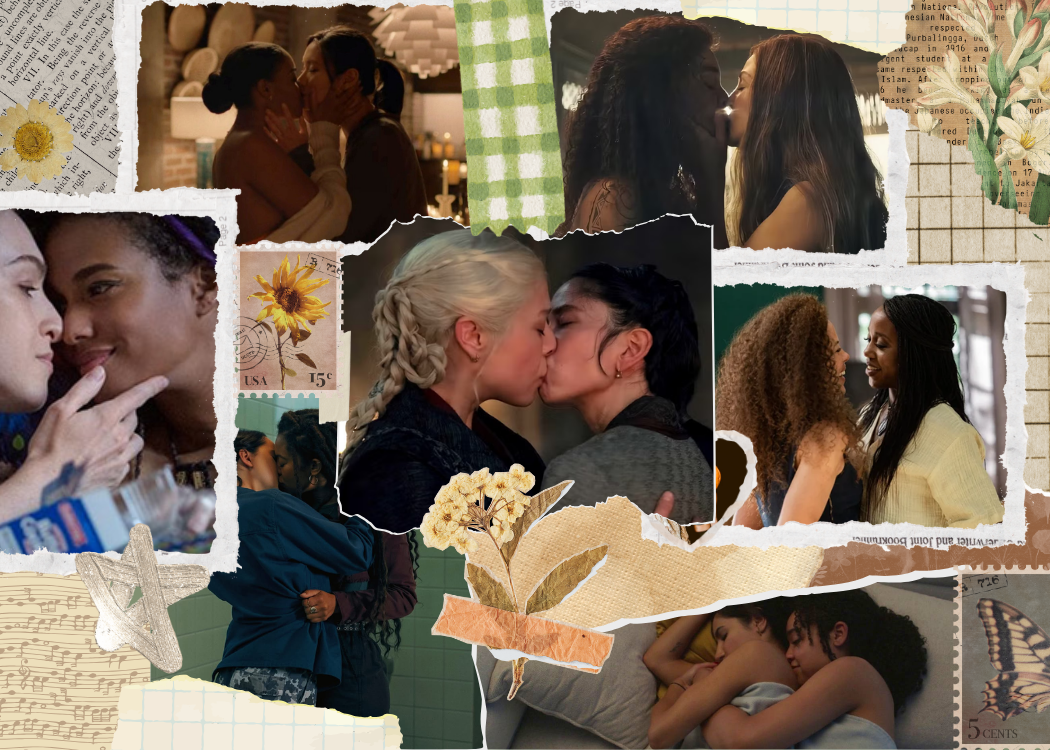
The moment a woman of color enters the story, she gets erased, ignored, or shoved to the sidelines – even when she’s canonically queer, complex, and everything fandom claims to love about their white counterparts.
This is the colonization of lesbian media. It mirrors every other system of exclusion that fandom supposedly exists to rebel against.
It’s An Industry Issue, First and Foremost
From the very beginning, Western media has taught audiences that love stories between women onscreen are reserved for white stories. The blueprint was set early on, from Buffy’s Willow/Tara, to Xena: Warrior Princess, and from indie movies like Imagine Me & You to classics like But I’m a Cheerleader. Beloved, proclaimed, and always white.
Even now, in this so-called “new era” of queer representation, the biggest, most lauded sapphic stories still look this, from Portrait of a Lady on Fire to The Haunting of Bly Manor. We have seen deep, tragic love between two white women across many different periods, and yet any media about the queer women of color – women who suffered from both homophobia and racism in those same periods is rarely made, let alone amplified by white people.
On the rare occasions where queer women of color are finally centered, the response from critics and fandom alike is tepid at best and hostile at worst, and the stories told tend to be full of stereotypes and harmful tropes like the recent beheading and brutal killing of Black lesbian character Suian Sanche (Sophie Okonedo) in Amazon’s The Wheel of Time.
Another example is First Kill, a Netflix series featuring a love story between a Black teenage vampire slayer and a white vampire. Despite the show’s success on social media, it was trashed by critics, denied the cultural space that shows like Heartstopper were gifted, and then quietly canceled after one season.
Queer women, it seems, are only desirable, only worthy of messy, tender, complicated stories, if they’re white.
Fandom’s “Progressivism” Crumbles Under Scrutiny
When fans claim to love representation, they rarely mean women of color. Oftentimes, they latch onto non-canon relationships between white x white characters.
Let’s break down a few examples, shall we?
Mysaria in ‘House of the Dragon’
Mysaria, played by Japanese-born actress Sonoya Mizuno, is one of the most underrated political players in HBO’s House of the Dragon. She’s layered, strategic, and a fascinating contrast to Emma D’Arcy’s Rhaenyra Targaryen. Her relationship with Rhaenyra culminates in an unexpected but sweet kiss towards the end of the season, and it’s a huge deal to see the main protagonist of an incredibly popular franchise be openly bisexual, as well as for her to be with a woman of color.
And yet, within fandom? Mysaria is irrelevant at best, and a mortal enemy at worst.
The queer fandom (and journalists, but we’ll get to that later) has collectively decided that the real love story of the series was between Rhaenyra Targaryen and Alicent Hightower- two white women. A non-canon ship, prioritized by queer shippers to the point where even Rhaenyra kissing Mysaria was described as being nothing but validation for Rhaenyra and Alicent’s love for each other.
They don’t care that Mysaria has just as much on-screen potential, complexity, and depth. She isn’t white, so she isn’t good enough. She isn’t “soft” enough, nor is she given the same grace when it comes to mistakes as her white peers.
This behavior is so common and so revealing that even Sonoya herself expressed concern that she would be faced with attacks from Rhaenyra and Alicent shippers.

Of course, the only thing they seemingly took from this article was Sonoya saying that she understands why people ship Rhaenyra and Alicent. Zero acknowledgement regarding the concerns of harassment, and spoiler alert: she was right. Even if they haven’t escalated to sending her anything directly, I have seen with my own eyes some pretty awful stuff about her and Mysaria on social media alone.
Now, I love a non-canon ship, I really do. I even enjoy the Rhaenyra/Alicent relationship! But when you start constantly speaking over women of color who express concern over journalistic bias, claim that Mysaria only exists to further Rhaenyra and Alicent’s journey, call her disgustingly misogynistic names, and even throw slurs at her, her actor, and anyone who speaks up? It becomes a whole different issue.
Taissa Turner in ‘Yellowjackets’
Taissa, played by Tawny Cypress (adult) and Jasmin Savoy Brown (teen), is one of Yellowjackets’ best characters. She’s a Black lesbian grappling with survival, ambition, and being true to herself.
She has two major relationships across the timelines:
Van Palmer (white woman): Together in the teen-timeline, having an affair in the present.
Simone (black woman): Taissa’s wife, with whom she has a son.
Guess which relationship fandom (and mainstream press) downplays, overlooks, and even ridicules sometimes?
Despite Taissa building a life, a family, and a home with Simone, fandom only speaks of her in relation to Van, with little mention of her family at all. Yes, Van (rest in peace, king) and Taissa are main characters and Van is the love of Taissa’s life, but Simone still deserves better than to be just another queer black woman overlooked for the sake of a white woman. When anyone dares to try and acknowledge that, they are often met with hostility from other fans.
Not to mention, even Taissa and Van’s relationship gets less attention than another non-canon white ship, Jackie Taylor and Shauna Shipman. That is an issue all on its own.
How Mainstream Media Reinforces the Bias
This isn’t just behavior exhibited by fans. It’s a journalistic problem, too.
Major entertainment outlets like Entertainment Weekly, Variety, and Vulture play a direct role in shaping fandom discourse, and they overwhelmingly center white sapphic stories, even when women of color are right there, leading the narrative.
Here is queer news outlet Them using the kiss between Rhaenyra and Mysaria in their article graphic:
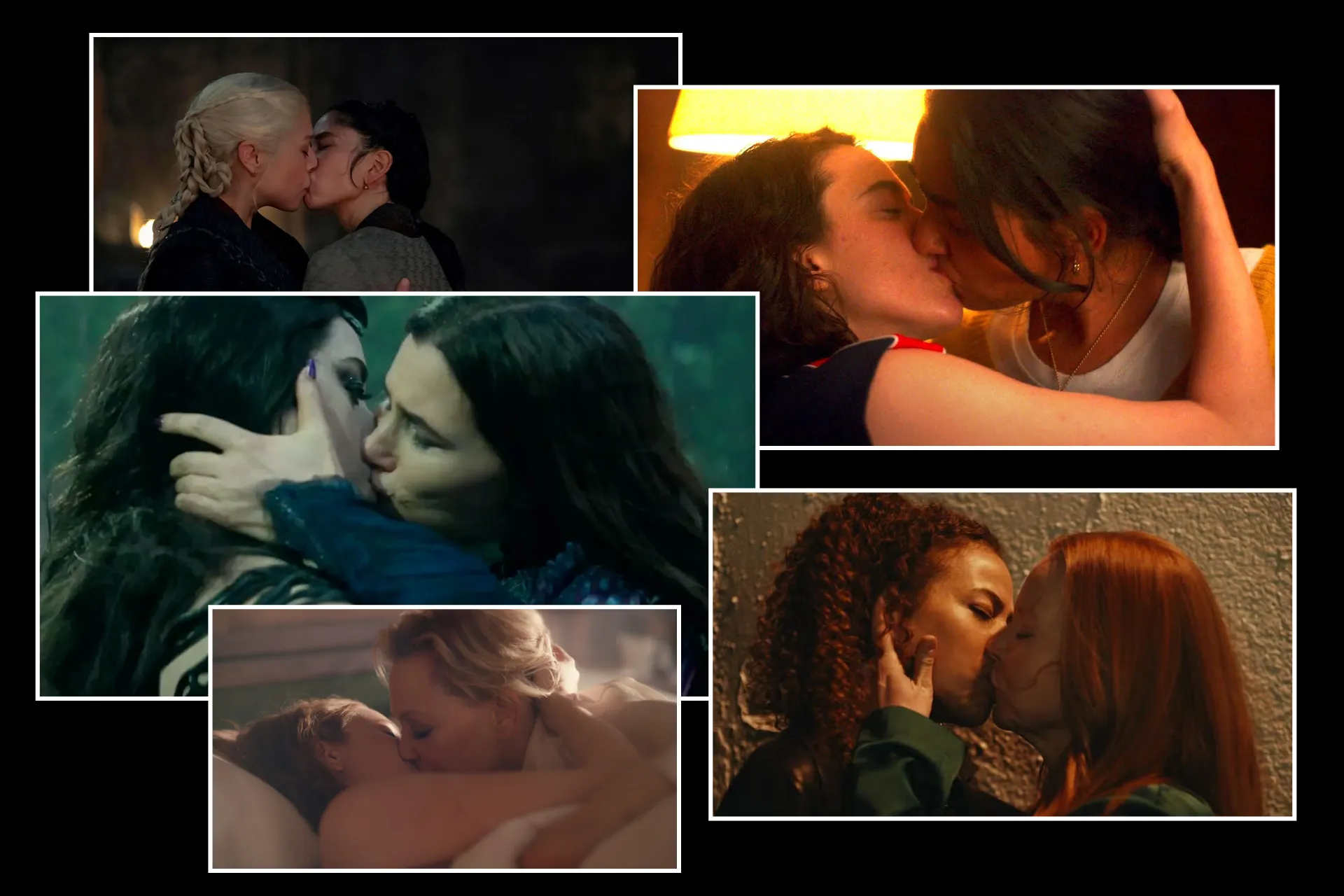
And here is the passage of the article where they manage to not only fail to name either Mysaria or Sonoya Mizuno while mentioning Olivia Cooke (who plays Alicent Hightower) but also manage to dismiss the Rhaenyra and Mysaria kiss entirely by saying “we can’t have it all”. They also fail to name Taissa Turner in the same article, despite using her in the graphic as well.

Xtra Magazine, once again conveniently leaving out acknowledging Mysaria or Sonoya Mizuno by name, and proclaiming that a scene in which Rhaenyra calls Alicent out for being partially responsible for the usurpation of her throne is more ‘electrifying’ than Rhaenyra and Mysaria’s kiss scene.

Or how about this article, titled “The Queer Love Story at the Center of House of the Dragon”?
I’m sure at this point it won’t surprise you to learn that not only does this article once again fail to mention Mysaria by name, it doesn’t even acknowledge that their kiss happened. All the while talking about the importance of queer representation and how “queerness isn’t just about sexuality or who you find attractive”, which sounds an awful lot like “Rhaenyra didn’t kiss who I wanted her to, so I’m going to find a way to detract from that”.
Or oh, what is this? Just Digital Spy having a fun little clickbait moment in which they pair a quote where D’Arcy is describing filming the kiss with Mysaria with a headline about Rhaenyra and Alicent.

There are so many other examples I could pull from, but I would be keeping you all here forever if I went through them all. A brief overview:
Anissa Pierce (Black Lightning): Anissa (Nafessa Williams) is a Black lesbian superhero with multiple on-screen relationships with women of color. Despite Anissa’s groundbreaking role, the show never developed a major fandom. Instead, other CW shows (Supergirl, Arrow) with whiter casts received much larger attention from both journalists and queer fans. Characters like Alex Danvers from Supergirl were celebrated massively for queer storylines, while Anissa was barely discussed outside Black spaces.
Amanita Caplan (Sense8): Amanita (Freema Agyeman) is Nomi’s Black, brilliant, and deeply supportive wife. She’s in one of the healthiest canon queer relationships on TV, but despite the show’s heavy fandom presence, mainstream media hardly reported on it.
Kat Edison (The Bold Type): Kat (Aisha Dee) is a biracial Black lesbian. The relationship between Kat and Adena, a Middle Eastern woman, initially had some support, but even at its height, their relationship was discussed less seriously than white sapphic pairings from other shows. Media coverage diminished entirely when Kat’s arc became messier and more politically charged. Dee herself spoke out about how the show’s leadership and writers’ room sidelined her character’s arcs compared to her white co-leads, giving her storylines that she did not feel served her character well.
Moira Strand (The Handmaid’s Tale): Moira (Samira Wiley) is a Black lesbian surviving in dystopian America. Despite Moira being one of the show’s most compelling characters, the fandom and media’s energy overwhelmingly went toward white characters’ narratives while Moira’s queerness and complexity became afterthoughts.
“But why does it matter? Journalists are allowed to write about what they want!”
Mainstream journalism is still dominated by white people, and when journalists specalizing in LGBTQ+ media consistently prioritize white queer narratives because there aren’t enough queer people of color in the newsroom to bring up our stories, they are telling audiences, studios, and critics who deserves attention and investment. This makes it even less likely for projects about queer women of color to be given the funding and distribution they need.
The bottom line is, if you as a journalist are unable to provide robust, unbiased research and reporting on all queer stories, you don’t deserve to be writing about them.
The Consequences: Harassment, Gaslighting, and Alienation
Whenever queer women of color point out these patterns within fandom spaces, the backlash is immediate and intense.
We’re told things like:
“It’s just what people ship!”
“You’re making everything about race!”
“Stop being dramatic!”
But it’s not just shipping preferences, it’s the very reflection of whose stories people see as worth telling, worth grieving, and worth celebrating, and how people react when we express the desire for more – whether that be more respect, more representation, or more compassion.
Queer women of color also often face harassment in fandom spaces:
Mass reporting on social media
Shadowbanning
Racial slurs in comment sections, DMs, and even forms of communication reserved for business, like a fan artist’s commission form or a work email
Being dogpiled on for daring to ask why a canon queer WOC is being belittled in favor of white fanon
And so much more
The spaces that claim to be safe and inclusive so quickly become mirrors of the same structures of exclusion they claim to oppose when a woman of color expresses her opinion.
Fandom Is Not Neutral. It Never Was.
Many in fandom like to pretend it’s a utopia- a pure meritocracy where only “vibes” and “personal preference” matter.
But preferences are political.
The stories we choose to engage with, the relationships we choose to celebrate, and the way we react to characters who may not reflect our exact life experiences – all of that reveals the biases we carry.
When characters of color and their canon relationships are systematically ignored, mocked, or vilified while white non-canon pairings are given the full “epic romance” treatment, that is far from neutrality and preference.
It’s colonization in action, re-inscribing the same racist, exclusionary patterns that the media has always taught us to accept.
Queer women of color have always existed. We were the ones who, alongside our trans brothers and sisters, led the fight for the rights we have today. And yet, we’ve always been forced to tell our own stories.
But we will not be edited out.
We are not here to ask for crumbs. We are not here to play nice. We are not here to be grateful for scraps while white queerness is exalted on the backs of our labor.
I, for one, am here to take up space.
I am here to call out the bias, the erasure, the whitewashing.
And I encourage us all to demand better – from fandom, from media, and each other.
As poet and activist Audre Lorde said:
“When we speak, we are afraid our words will not be heard or welcomed. But when we are silent, we are still afraid. So it is better to speak.”